
Sharavati River: Origin, History, Sacred Journey, Natural Wonders, Human Impact & The Only Way Forward

1. Introduction: Why the Sharavati River Matters More Than Ever Today
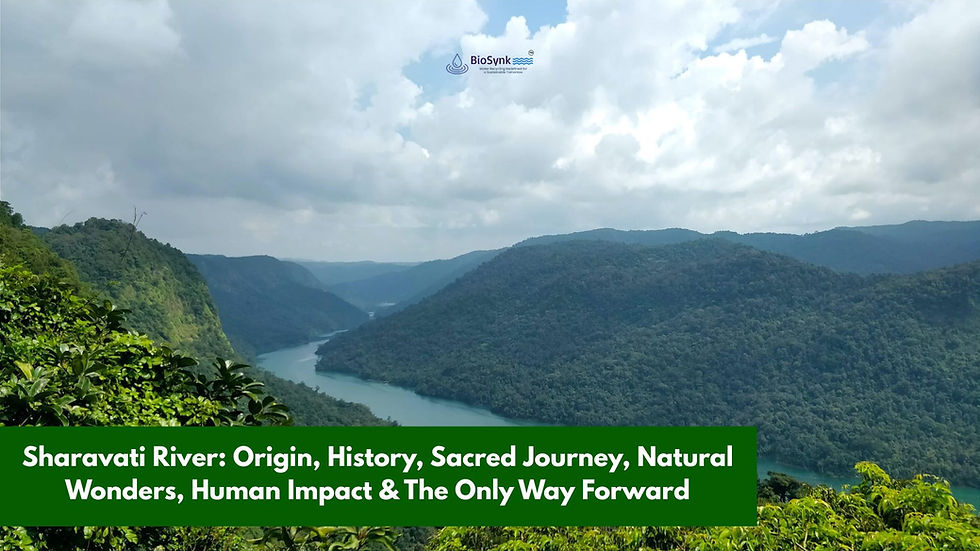
The Sharavati River is one of Karnataka’s most powerful yet fragile natural lifelines. Born deep within the lush Western Ghats, this river carved dense forests, sustained wildlife, created India’s tallest plunge waterfall-Jog Falls-and supported generations of communities living along its basin. Unlike long plains rivers, Sharavati is a short but intense west-flowing river whose ecological value far exceeds its length.
Today, however, this sacred river is under silent threat. Deforestation, hydropower interventions, unregulated tourism, sewage discharge from settlements, and climate stress are steadily weakening the Sharavati’s natural balance. Once known for its roaring monsoon flow and crystal-clear waters, parts of the river now struggle with reduced discharge and contamination. Understanding Sharavati’s origin, history, cultural value, environmental importance, and human impact is critical if we want to protect one of the Western Ghats’ most precious water systems before irreversible damage occurs.
2. What Is the Sharavati River? A Complete Explanation

The Sharavati River is a major west-flowing river of Karnataka that drains into the Arabian Sea. Unlike east-flowing rivers that traverse vast plains, Sharavati flows swiftly through steep terrain, dense forests, and biodiversity hotspots. It is best known for forming Jog Falls, one of India’s most iconic natural wonders.
The river supports forest ecosystems, hydroelectric power generation, agriculture, fishing communities, and tourism-based livelihoods. More importantly, Sharavati is a core ecological artery of the Western Ghats-one of the world’s eight “hottest hotspots” of biological diversity. Any disturbance to this river directly affects forests, wildlife corridors, groundwater recharge, and coastal ecosystems. Sharavati is not just a river-it is a living system that connects mountains, forests, people, and the sea.
3. Origin of the Sharavati River: Where It Begins & Why It Is Sacred

The Sharavati River originates at Ambutirtha, near Thirthahalli in Shivamogga district, deep within the Western Ghats. Surrounded by evergreen forests, sacred groves, and ancient landscapes, this origin point is revered by locals as a holy site. Traditional beliefs consider the river a divine manifestation of nature’s purity.
In ancient times, such river sources were protected through customs, temple rituals, and community stewardship. The forests around Ambutirtha acted as natural water regulators, ensuring steady flow even during dry seasons. Today, however, deforestation, road construction, and human intrusion threaten these sensitive headwater zones. When a river’s source weakens, the entire system downstream begins to collapse-making protection of Sharavati’s origin absolutely vital.
4. Geography of Sharavati: The Sacred Journey from Ghats to Sea

From its origin, the Sharavati flows westward for about 128 km, cutting through steep valleys, dense rainforests, and rocky terrain before meeting the Arabian Sea near Honnavar. Along its journey, the river creates dramatic drops, gorges, and cascades-most famously Jog Falls, where the river plunges nearly 253 meters.
The Sharavati basin spans parts of Shivamogga and Uttara Kannada districts, sustaining forests, wildlife sanctuaries, agricultural pockets, and coastal fishing communities. Unlike slow-moving rivers, Sharavati’s flow is fast and seasonal, making it extremely sensitive to flow obstruction and pollution. Even small changes in discharge or water quality can cause large-scale ecological disruption downstream.
5. Historical & Cultural Importance of the Sharavati River

For centuries, the Sharavati basin has been home to indigenous communities, forest dwellers, temple settlements, and agrarian societies. The river influenced settlement patterns, farming cycles, and spiritual practices tied to monsoon rhythms. Temples, sacred ponds, and village rituals along the river reflect a deep cultural bond with water.
Unlike empire-driven rivers, Sharavati’s legacy lies in ecological harmony rather than urban dominance. Communities historically respected the river’s seasonal nature, extracting only what was needed. This balance began to shift with modern infrastructure, hydropower projects, and commercial tourism-marking a turning point in the river’s relationship with humans.
6. Jog Falls: Sharavati’s Greatest Natural Wonder

Jog Falls is not just a tourist attraction-it is the physical expression of Sharavati’s power. During monsoon months, the river transforms into four massive cascades, creating one of Asia’s most breathtaking natural spectacles. This waterfall depends entirely on healthy upstream flow and forest cover.
Over the years, regulated water release from reservoirs, reduced forest absorption, and climate variability have drastically altered Jog Falls’ seasonal intensity. When the river weakens, the falls suffer. Protecting Sharavati upstream is the only way to preserve Jog Falls for future generations.
7. Hydropower Projects & Flow Alteration: A Double-Edged Sword

The Sharavati River plays a major role in Karnataka’s hydropower generation, particularly through the Linganamakki Dam and associated projects. While these projects support energy needs, they have also drastically altered natural flow patterns.
Reduced downstream flow affects aquatic life, sediment transport, estuarine balance, and groundwater recharge. During dry seasons, long stretches of the river experience low flow, stressing ecosystems that evolved around consistent water availability. Energy security is important-but without ecological safeguards, hydropower can silently destroy the river it depends on.
8. Pollution & Sewage: The Emerging Threat to Sharavati

Traditionally considered a “clean river,” Sharavati is now facing growing pollution pressure. Untreated sewage from towns, lodges, resorts, and roadside settlements increasingly enters feeder streams. Tourism infrastructure around Jog Falls generates wastewater that often lacks proper treatment facilities.
Organic waste, detergents, plastics, and sewage introduce harmful bacteria and nutrients into the river. Over time, this leads to oxygen depletion, fish mortality, and water quality deterioration. Once pollution enters a fast-flowing river like Sharavati, it quickly spreads downstream-making prevention far more important than cleanup.
9. Impact on Ecology, Wildlife & Coastal Systems

Sharavati supports amphibians, fish species, birds, reptiles, and mammals unique to the Western Ghats. Pollution and flow disruption destroy breeding habitats and migration patterns. Downstream, contaminated river water affects mangroves, estuaries, and coastal fisheries near Honnavar.
Groundwater contamination spreads inland, affecting wells and agricultural water sources. What begins as a local discharge problem quickly becomes a regional ecological crisis. Saving Sharavati is not only about freshwater-it is about protecting interconnected land-sea ecosystems.
10. Why Untreated Wastewater Is the Biggest Invisible Enemy
Unlike visible deforestation or dam construction, wastewater pollution operates quietly. Every untreated outlet continuously releases harmful contaminants into the river. Over time, this cumulative load overwhelms the river’s natural self-purification ability.
Without scientific sewage treatment, no river-no matter how powerful-can survive modern population pressure. The Sharavati’s short length and steep flow make it even more vulnerable to concentrated pollution loads.
11. Why Only Modern Sewage Treatment Can Protect the Sharavati
The most effective way to protect the Sharavati River is to stop pollution at the source. Modern biological Sewage Treatment Plants (STPs) ensure that no untreated wastewater enters natural drains or feeder streams.
CPCB norms now mandate wastewater treatment for hotels, industries, commercial buildings, resorts, apartments, and institutions. Compliance is no longer optional-it is essential for ecological survival. Preventing sewage discharge is the single most impactful action for river conservation today.
12. BioSynk: The Only Practical & Sustainable Way Forward

BioSynk’s Bio STP technology offers a proven, eco-friendly solution designed specifically for Indian conditions. It treats sewage using natural biological processes, produces no foul smell, requires no skilled operator, and delivers CPCB-compliant treated water consistently.
BioSynk systems are ideal for hotels, resorts, industries, institutions, apartments, and commercial units across the Sharavati basin. Each installation directly prevents thousands of litres of sewage from entering this fragile river system.Learn more: https://www.biostp.co.in/sewage-treatment-plant
Conclusion: Saving the Sharavati Is a Shared Responsibility
The Sharavati River is a gift of the Western Ghats-powerful, sacred, and irreplaceable. Allowing it to degrade through neglect and untreated wastewater would be an irreversible loss. Conservation does not begin downstream; it begins at every sewage outlet, every building, and every decision we make today.
With responsible development, scientific wastewater treatment, and collective action, Sharavati can continue to flow strong-from forested origins to the Arabian Sea.
BioSynk stands committed to being part of that solution-protecting rivers by stopping pollution before it begins.


Comments