
No STP in Your School or College? One Pollution Control Inspection Could Shut You Down


Introduction: The Hidden Risk Many Educational Institutions Ignore
Schools and colleges are places where thousands of students gather every day to learn, grow, and build their future. But behind the classrooms, laboratories, hostels, and canteens lies a silent environmental challenge that many institutions overlook - untreated sewage.
Every campus produces large amounts of wastewater from toilets, hostels, kitchens, laboratories, and cleaning areas. If this wastewater is discharged without proper treatment, it can contaminate groundwater, create foul odours, spread disease, and lead to serious environmental violations.
Today, environmental regulations in India have become stricter. Pollution Control Boards now require large campuses and institutions generating significant wastewater to install a sewage treatment plant (STP) and manage wastewater responsibly. Failure to comply can lead to penalties, legal notices, or even operational restrictions.
This is why school and college owners must take wastewater management seriously. A proper STP is no longer optional - it is a necessity for compliance, health, sustainability, and responsible campus management.
The Growing Wastewater Problem in Schools and Colleges
Educational campuses are mini cities. A single institution can generate thousands of litres of sewage every day.
Major wastewater sources on campus include:
Student and staff washrooms
Hostel bathrooms and laundry areas
College canteens and mess kitchens
Laboratory discharge
Cleaning and maintenance activities
When thousands of students use campus facilities daily, the wastewater generated increases significantly.
Without proper treatment, this wastewater often enters drains or soil directly, causing pollution and hygiene problems.
Untreated sewage can result in:
Groundwater contamination
Bad odours around campus
Mosquito breeding and pests
Waterborne diseases such as cholera and typhoid
Damage to surrounding ecosystems
These risks directly affect student health, campus reputation, and environmental safety.
Pollution Control Board Regulations Every Institution Must Know
Environmental authorities in India have introduced strict wastewater regulations.
According to the Central Pollution Control Board (CPCB) and State Pollution Control Boards, institutions that generate significant wastewater must treat it before discharge. Educational institutions with large campuses, hostels, or high-water consumption are expected to install sewage treatment systems.
If a school or college fails to comply, the consequences may include:
Environmental fines and penalties
Closure notices from authorities
Denial of expansion approvals
Damage to institutional reputation
Complaints from surrounding communities
For campus owners and administrators, ignoring sewage management today could lead to serious legal and financial problems tomorrow.
Student Health and Hygiene: A Responsibility Every Institution Must Take
Educational institutions are responsible not only for education but also for student safety and well-being.
Untreated sewage is a breeding ground for harmful bacteria, viruses, and parasites. When wastewater contaminates nearby soil or groundwater, it can spread diseases and create unhealthy living conditions.
Some common problems caused by untreated sewage include:
Mosquito and pest infestation
Contaminated groundwater
Unpleasant campus odour
Poor sanitation around hostels and toilets
Increased risk of waterborne diseases
Installing a proper sewage treatment plant ensures a clean, hygienic, and healthy campus environment for students and staff.
Water Scarcity: Why Reusing Treated Water Matters
India is facing a growing water crisis. Many cities and campuses struggle with water shortages, especially during summer.
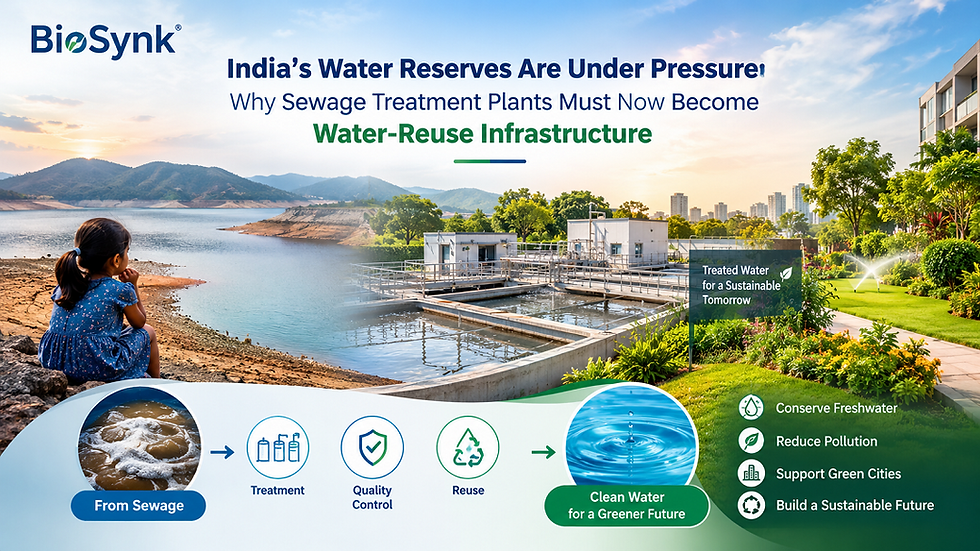
A sewage treatment plant provides an effective solution by recycling wastewater into reusable water.
Treated water from STPs can be safely used for:
Gardening and landscaping
Toilet flushing
Cleaning and washing areas
Cooling towers
Construction activities
This reduces freshwater consumption significantly and helps institutions save water costs while contributing to environmental conservation.
In fact, many campuses can reduce their freshwater demand by up to 70–80% through water recycling.
Environmental Responsibility and Sustainable Campuses
Modern educational institutions are expected to promote sustainability and environmental awareness.
Installing a sewage treatment plant helps schools and colleges:
Reduce environmental pollution
Protect local water bodies
Support green campus initiatives
Meet ESG and sustainability goals
Qualify for green building certifications
Responsible wastewater management also sends a strong message to students about environmental stewardship.
Educational institutions play a crucial role in shaping the mindset of future generations. When campuses adopt sustainable practices, students learn the importance of protecting the environment.
What is a Sewage Treatment Plant for Schools and Colleges?
A Sewage Treatment Plant (STP) is a wastewater treatment system designed to remove contaminants from sewage and convert it into clean reusable water.
The treatment process usually includes several stages:
1. Collection and Equalization
Wastewater from toilets, kitchens, and hostels is collected and balanced to maintain a steady flow.
2. Biological Treatment
Microorganisms break down organic waste and pollutants naturally.
3. Clarification
Solid particles are separated from treated water.
4. Filtration and Disinfection
Advanced filtration and disinfection remove remaining impurities and pathogens.
5. Treated Water Storage
Clean treated water is stored and reused for non-drinking purposes.
These treatment processes ensure that wastewater meets environmental discharge standards while making water reusable for campus operations.
Challenges with Traditional Sewage Treatment Plants
Many institutions hesitate to install STPs due to concerns about cost, maintenance, or complexity.
Traditional sewage treatment plants often require:
Continuous power supply
Skilled operators
Chemical dosing
High electricity consumption
Frequent maintenance
For schools and colleges, these operational challenges can create difficulties in long-term management.
This is why modern institutions are increasingly choosing advanced biological STP systems designed specifically for educational campuses.
The Smart Solution: Bio STP for Educational Institutions
Modern Bio STP systems use natural biological treatment methods to break down wastewater efficiently.
These systems offer several advantages for campuses:
Odour-free and silent operation
Low electricity consumption
Minimal maintenance requirements
Compact and space-saving design
Automated operation
High efficiency wastewater treatment
Most importantly, treated water can be safely reused for campus utilities, reducing water consumption and operating costs.
Why Educational Institutions Across India Are Installing STPs
Forward-thinking schools and colleges are now installing sewage treatment plants for several reasons:
Regulatory compliance with pollution control boards
Health and sanitation improvements on campus
Water conservation and cost savings
Environmental protection and sustainability goals
Improved campus reputation and infrastructure value
Institutions that adopt responsible wastewater management today will be better prepared for future environmental regulations.
Why Choose Bio Synk for Sewage Treatment Plants in Schools and Colleges
If your institution is planning to install a sewage treatment plant for schools and colleges, choosing the right technology partner is critical.
At Bio Synk, we specialize in designing advanced Bio Sewage Treatment Plants tailored specifically for educational institutions.
Our solutions are designed to deliver:
CPCB and SPCB compliant wastewater treatment
Fully underground installation to save campus space
Odour-free and silent operation
Low maintenance and low electricity consumption
Long-lasting, durable systems
High-quality treated water for reuse
Our systems allow campuses to reuse treated water for gardening, flushing, and cleaning, helping institutions save water and operating costs while maintaining environmental compliance.
Learn more about our solutions here:
Build a Cleaner, Greener Campus with Bio Synk
Educational institutions are responsible for shaping the future. By installing a sewage treatment plant, your campus can lead by example - protecting the environment, conserving water, and creating a healthier space for students.
If your school or college currently does not have a sewage treatment plant, now is the time to act before inspections or regulations create unnecessary problems.
Bio Synk provides advanced, eco-friendly sewage treatment solutions for schools, colleges, and universities across India.
📞 Call / WhatsApp: +91 95512 61154
📧 Email: md@biosynk.co.in
Let’s build sustainable campuses and a cleaner future — one drop of water at a time.


Comments