
Industrial Park Sewage Treatment Plant: Protecting the Environment While Powering Industrial Growth


Introduction: Industrial Growth Must Not Come at the Cost of the Environment
Industrial parks are the backbone of economic development. Across India and the world, industrial zones bring together manufacturing units, logistics centers, warehouses, and offices that collectively drive employment, innovation, and economic growth. However, with rapid industrial expansion comes a major challenge — wastewater management.
Every industrial park generates large volumes of wastewater from restrooms, canteens, washing areas, worker housing, and operational processes. If this wastewater is not treated properly, it can contaminate soil, pollute groundwater, damage ecosystems, and create serious public health risks.
This is why Industrial Park Sewage Treatment Plants (STPs) are becoming an essential part of modern industrial infrastructure. Governments, environmental authorities, and pollution control boards now mandate proper sewage treatment systems to ensure industries grow responsibly without harming the environment.
A well-designed sewage treatment plant not only protects the environment but also supports sustainable industrial growth by enabling water reuse, reducing pollution, and helping industrial parks comply with environmental regulations.
Understanding Sewage Generation in Industrial Parks
Industrial parks are complex ecosystems where multiple businesses operate simultaneously. While most people associate industrial wastewater with factory effluents, a significant portion of wastewater generated within industrial parks actually comes from domestic sewage sources.
These sources include:
Worker restrooms and sanitation facilities
Office buildings and administrative blocks
Industrial canteens and kitchens
Worker accommodation facilities
Cleaning and maintenance operations
When hundreds or even thousands of workers operate within an industrial park, the daily sewage generation can easily reach thousands of liters per day.
If this wastewater is discharged untreated, it leads to severe environmental consequences such as:
Groundwater contamination
Foul odors and unsanitary conditions
Spread of harmful bacteria and pathogens
Pollution of nearby rivers and lakes
A Sewage Treatment Plant (STP) ensures that this wastewater is properly treated before it is discharged or reused.
Why Industrial Parks Must Install Sewage Treatment Plants
Environmental regulations in India have become stricter in recent years. Pollution Control Boards across states require industrial parks and large commercial developments to install proper sewage treatment systems.
Without a sewage treatment plant, industrial parks may face:
1. Environmental Violations
Untreated sewage can severely damage ecosystems and water bodies. Regulatory authorities closely monitor wastewater discharge to prevent pollution.
2. Heavy Penalties and Legal Action
Industrial zones operating without proper wastewater treatment systems risk fines, legal notices, or even closure orders from environmental authorities.
3. Public Health Risks
Untreated sewage contains harmful pathogens and chemicals that can cause diseases and create unhealthy working conditions for employees.
4. Water Scarcity Challenges
Industrial parks require large amounts of water for daily operations. Without wastewater treatment and reuse, water consumption increases dramatically.
5. Damage to Corporate Reputation
Companies today are expected to operate responsibly. Industrial parks that neglect environmental protection risk losing trust among investors, partners, and communities.
Installing a Sewage Treatment Plant is therefore not just a regulatory requirement — it is a responsible and strategic investment.
How Industrial Park Sewage Treatment Plants Work
A modern sewage treatment plant is designed to remove contaminants from wastewater through a combination of physical, biological, and chemical processes.
The treatment process generally includes the following stages:
1. Preliminary Treatment
In this stage, large solids such as plastics, paper, and debris are removed using screens and grit chambers. This prevents blockages and protects downstream equipment.
2. Primary Treatment
Wastewater enters settling tanks where heavier solids settle at the bottom while lighter materials float to the surface. This process reduces the solid content in wastewater.
3. Biological Treatment
Microorganisms are used to break down organic pollutants present in sewage. This is the most critical stage in wastewater treatment.
4. Secondary Clarification
After biological treatment, the treated water passes through clarifiers where remaining suspended particles settle down.
5. Filtration and Disinfection
Advanced filtration systems remove remaining impurities, and disinfection processes eliminate harmful bacteria and pathogens.
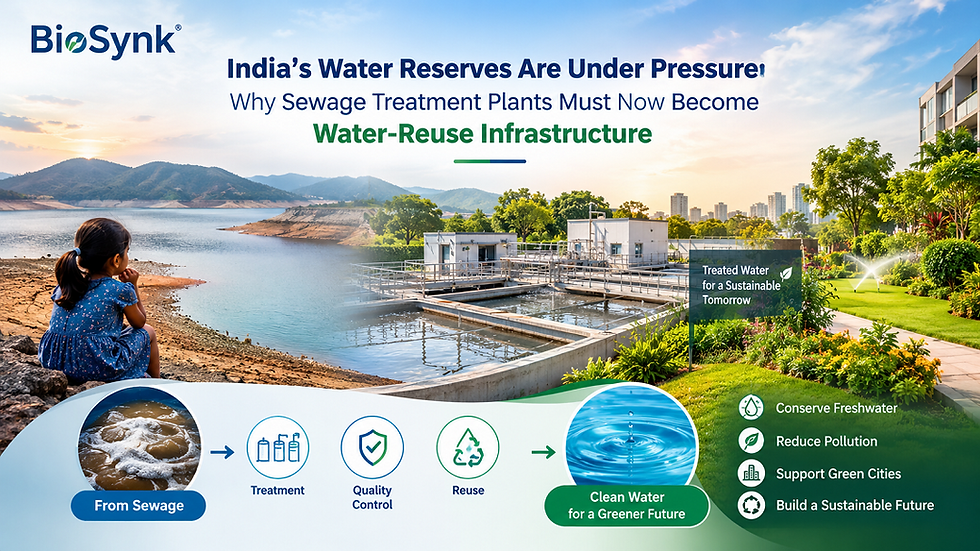
6. Treated Water Reuse
The final treated water can be reused for:
Gardening and landscaping
Cooling towers
Toilet flushing
Industrial cleaning
This significantly reduces the demand for fresh water.
The Environmental Benefits of Industrial Park STPs
Installing a sewage treatment plant in an industrial park creates significant environmental benefits.
Protection of Water Bodies
Proper wastewater treatment prevents pollutants from entering rivers, lakes, and groundwater systems.
Reduced Pollution
STPs remove harmful contaminants and organic pollutants before wastewater is released into the environment.
Water Conservation
Treated water can be reused within the industrial park, reducing freshwater consumption.
Improved Sanitation
A well-managed sewage treatment system prevents foul odors, mosquito breeding, and unhygienic conditions.
Sustainable Industrial Development
By managing wastewater responsibly, industrial parks contribute to long-term environmental sustainability.
Why Bio STP Technology Is the Smart Choice for Industrial Parks
Traditional sewage treatment systems often require large land areas, high energy consumption, and complex maintenance.
Modern Bio STP technology offers a smarter and more efficient alternative.
Bio STPs use advanced biological processes to break down sewage using naturally occurring bacteria and microorganisms.
This method provides several advantages:
Lower operational costs
Reduced sludge production
Compact design suitable for industrial parks
Environmentally friendly treatment process
Higher efficiency in removing organic pollutants
Because of these benefits, Bio STPs are becoming increasingly popular across commercial and industrial developments.
Key Factors to Consider When Installing an Industrial Park STP
Before installing a sewage treatment plant, industrial park developers must consider several important factors:
Sewage Generation Capacity
The STP must be designed according to the total sewage generated by workers, offices, and facilities within the park.
Available Space
Compact and modular systems are often preferred for industrial parks where space may be limited.
Regulatory Compliance
The treatment system must meet the discharge standards set by Pollution Control Boards.
Energy Efficiency
Modern STPs are designed to reduce electricity consumption while maintaining high treatment efficiency.
Long-Term Maintenance
Reliable maintenance and service support are essential to ensure consistent plant performance.
Choosing the right STP provider ensures the system operates efficiently for many years.
Industrial Parks and the Future of Sustainable Infrastructure
The future of industrial development depends heavily on sustainable infrastructure. Governments, investors, and global corporations now prioritize environmental responsibility.
Industrial parks that adopt advanced wastewater treatment systems gain several advantages:
Compliance with environmental laws
Improved water resource management
Reduced operational risks
Enhanced reputation as eco-friendly developments
In the coming years, sustainable wastewater management will become a defining factor for successful industrial zones.
Why Choose Bio Synk for Industrial Park Sewage Treatment Plants
At Bio Synk, we specialize in providing advanced and reliable sewage treatment solutions designed specifically for industrial environments.
Our sewage treatment plants are engineered to deliver efficient, eco-friendly, and cost-effective wastewater management for industrial parks, commercial complexes, and large facilities.
Our Key Advantages
Customized STP SolutionsEvery industrial park has different wastewater requirements. We design customized sewage treatment plants based on your sewage generation capacity.
Advanced Bio STP TechnologyOur treatment systems use advanced biological processes to ensure effective wastewater treatment with minimal environmental impact.
Compact and Efficient DesignOur STPs are designed to maximize treatment efficiency while occupying minimal space.
Regulatory ComplianceAll our systems are designed to meet Pollution Control Board standards and environmental regulations.
Reliable PerformanceOur sewage treatment plants are built for long-term reliability and consistent performance.
Let’s Build Cleaner and Greener Industrial Parks Together
Industrial growth and environmental protection must go hand in hand. Installing a sewage treatment plant is not just about meeting regulations — it is about building a sustainable future for industries, communities, and the environment.
If your industrial park is planning to install a new sewage treatment plant or upgrade an existing system, Bio Synk is here to help.
We provide expert consultation, customized design, and reliable installation of advanced sewage treatment systems.
Learn more about our Industrial Park STP solutions:
📞 Phone: +91 95512 61154
📧 Email: md@biosynk.co.in
Together, we can create cleaner industrial parks, conserve water resources, and protect the environment for future generations.


Comments