
Wastewater Treatment in Paper & Pulp Mills: The Hidden Cost Drain & How Bio STP Saves Lakhs Every Year


Detailed Introduction: The Silent Crisis in Paper & Pulp Industry
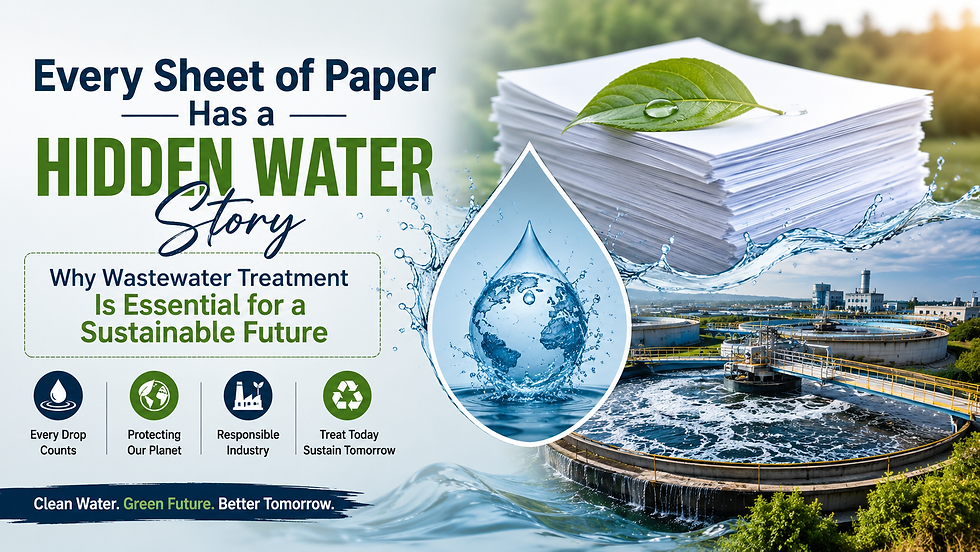
The paper and pulp industry is one of the backbone sectors of industrial growth in India. From packaging to printing, tissue to cardboard, its demand continues to rise every year. But behind this growth lies a serious environmental challenge—massive wastewater generation.
Every ton of paper produced generates thousands of liters of wastewater loaded with chemicals, lignin, suspended solids, and organic pollutants. If not treated properly, this wastewater becomes a financial burden, regulatory risk, and environmental hazard.
Today, industries are not just expected to produce—they are expected to operate sustainably, comply with strict norms, and reduce operational costs. This is where advanced Bio STP technology becomes a game-changer.
What is Wastewater in Paper & Pulp Mills?
Wastewater in paper and pulp mills is not ordinary sewage—it is a complex mixture of:
High Biological Oxygen Demand (BOD)
High Chemical Oxygen Demand (COD)
Chlorinated compounds
Fibers and suspended solids
Toxic chemicals from bleaching processes
This makes treatment more challenging compared to domestic sewage.
Without proper treatment:
Water bodies get polluted
Soil fertility gets affected
Groundwater becomes unsafe
Industries face heavy penalties
The Growing Threat of Untreated Industrial Wastewater
Ignoring wastewater treatment is no longer an option—it is a business risk.
1. Strict Environmental Regulations
Government bodies like Central Pollution Control Board have tightened discharge norms. Non-compliance can lead to:
Heavy fines
Factory shutdowns
Legal consequences
2. Rising Water Costs
Freshwater is becoming expensive. Industries relying on untreated discharge lose the opportunity to reuse water and reduce costs.
3. Brand Reputation Damage
In today’s ESG-driven world, companies are judged on sustainability. Poor wastewater management can damage brand credibility.
4. Operational Inefficiencies
Untreated sludge and wastewater increase maintenance costs and reduce plant efficiency.
Why Conventional Treatment Systems Fail in Paper Mills
Traditional Effluent Treatment Plants (ETPs) often fail due to:
High energy consumption
Complex maintenance
Sludge handling issues
Inconsistent performance
High operational costs
Many industries invest heavily but still struggle with compliance.
Why Bio STP is the Smartest Solution for Paper & Pulp Wastewater
Bio STP (Biological Sewage Treatment Plant with anaerobic process) offers a next-generation solution tailored for industrial wastewater challenges.
1. Advanced Anaerobic Treatment Technology
Unlike conventional systems, Bio STP uses anaerobic bacteria that break down organic waste efficiently—even at high COD levels.
2. Low Power Consumption
Bio STP significantly reduces electricity usage compared to aerobic systems, helping industries save lakhs annually.
3. Sludge Reduction
Minimal sludge generation means:
Lower disposal costs
Cleaner operations
Reduced environmental impact
4. Methane Generation = Free Energy
One of the biggest advantages:
Converts waste into biogas (methane)
Can be used for cooking, heating, or energy
Direct cost savings
5. Compact & Scalable Design
Perfect for:
Small mills
Large industrial units
Expansion projects
How Bio STP Works in Paper & Pulp Mills
The process is simple yet powerful:
Primary Treatment
Removal of large solids and fibers
Anaerobic Digestion
Organic waste is broken down by bacteria
→ Methane gas is produced
Secondary Treatment
Further purification to meet discharge standards
Water Reuse
Treated water can be reused for:
Cooling
Washing
Gardening
Real Cost Savings: Turn Waste into Profit
Let’s break it down:
Reduce electricity bills by up to 40–60%
Save water procurement costs
Cut sludge disposal expenses
Generate free fuel (biogas)
Avoid penalties and compliance risks
👉 Over time, your STP becomes not a cost—but a profit-generating asset.
Why Industries Are Switching to Bio STP in 2026
The shift is clear:
Sustainability is mandatory
Water reuse is essential
Energy savings are critical
Compliance is non-negotiable
Industries that adapt early gain:
Cost advantage
Brand trust
Regulatory peace of mind
Why Choose Bio Synk for Wastewater Treatment Solutions
At Bio Synk, we don’t just install STPs—we deliver complete wastewater transformation solutions.
What Makes Us Different?
Customized solutions for paper & pulp mills
Advanced anaerobic Bio STP technology
Expert consultation & design
Installation + maintenance support
Proven cost-saving results
We understand industrial challenges and provide solutions that actually work in real conditions.
Let’s Build a Sustainable & Profitable Industry Together
Wastewater is not waste—it is an untapped resource.
With the right technology, you can:
Save lakhs every year
Generate your own fuel
Achieve compliance easily
Protect the environment
🚀 Take Action Today
If you own or manage a paper & pulp mill, this is the right time to upgrade your wastewater system.
👉 Get a FREE consultation from Bio Synk experts


Comments