
Paper Mill Wastewater Treatment: The Hidden Crisis Every Pulp Industry Must Solve in 2026


Introduction: The Water No One Wants to Talk About
Paper is everywhere.
From packaging and books to tissues and cartons - it powers modern life.
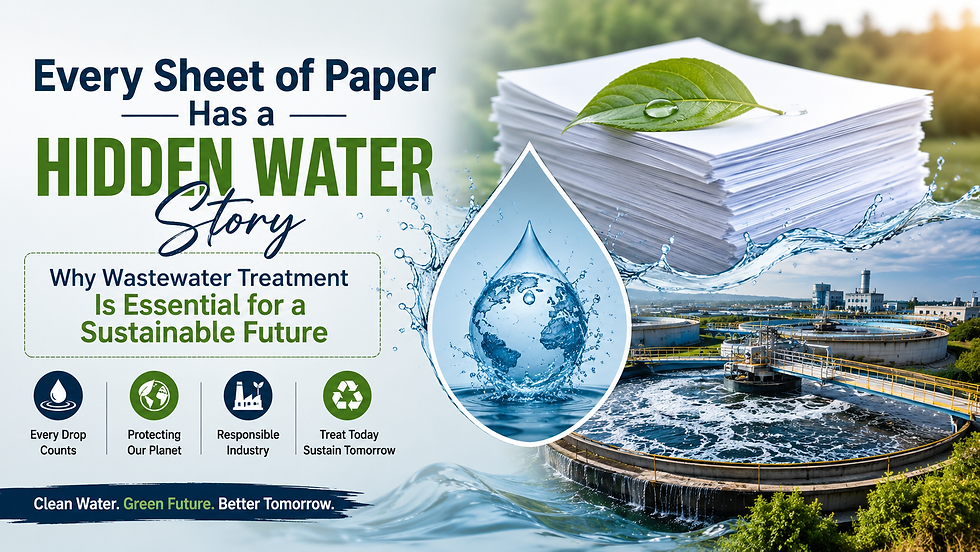
But behind every sheet of paper lies a dark truth - millions of litres of polluted wastewater discharged daily by paper and pulp mills.
This wastewater is not ordinary.
It carries:
High COD & BOD
Dark colour contamination
Toxic lignin residues
Suspended solids
Chemical bleaching agents
Left untreated - it silently damages rivers, soil, ecosystems, and even industrial reputation.
In 2026, this is no longer just an environmental concern.
It is a compliance crisis, a financial risk, and a sustainability challenge that every pulp and paper manufacturer must urgently solve.
Understanding Paper Mill Wastewater
Paper production is a water-intensive process.
Water is used in:
Pulping
Washing
Bleaching
Paper formation
Cooling
Chemical processing
This leads to wastewater that contains:
✔ Organic pollutants
✔ Colour compounds
✔ Fibres & suspended solids
✔ Chlorinated chemicals
✔ Dissolved lignin
The result?
Dark, odorous effluent that cannot be released into nature without treatment.
Without proper wastewater treatment:
Rivers turn toxic
Groundwater becomes unsafe
Soil fertility drops
Marine life suffers
And most importantly -
Industries face regulatory penalties and shutdown risks.
The Hidden Environmental Impact
Untreated or poorly treated paper mill effluent causes:
1. Water Body Contamination
Dark-coloured discharge blocks sunlight penetration in rivers and lakes, disturbing aquatic ecosystems.
2. Oxygen Depletion
High BOD levels consume dissolved oxygen, suffocating aquatic life.
3. Toxic Build-Up
Chlorinated compounds and organic pollutants accumulate in water and soil.
4. Long-Term Groundwater Damage
Improper discharge leads to seepage, contaminating drinking water sources.
5. Ecosystem Imbalance
Effluent toxicity impacts fish, plants, and microbial life.
This is why regulators across the world are tightening discharge norms.
Why 2026 Is a Turning Point for Paper Mills
The industry is entering a new era.
Environmental regulations are becoming stricter.
Investors are prioritizing ESG compliance.
Customers are demanding sustainable sourcing.
And industrial parks are increasingly enforcing wastewater standards.
Paper mills that fail to upgrade treatment systems may face:
⚠ Operational restrictions
⚠ Legal penalties
⚠ Loss of contracts
⚠ Brand damage
⚠ Higher operational costs
Wastewater is no longer just a waste stream.
It is now a business risk.
Key Wastewater Challenges in Paper & Pulp Mills
Paper mills commonly struggle with:
Persistent colour removal
High COD reduction
Sludge management
Chemical load balancing
Space constraints for treatment plants
Traditional systems often fail to deliver:
❌ Stable performance
❌ Low operational cost
❌ Consistent compliance
This leads to recurring issues like:
Treatment inefficiency
Excess sludge generation
Rising energy consumption
The industry needs smarter, sustainable solutions.
The Shift Toward Advanced Treatment Solutions
Modern paper mills are moving toward:
✔ Biological treatment systems
✔ Colour removal technology
✔ Modular treatment plants
✔ Low-energy processes
✔ Reusable water recovery
The focus is no longer just on disposal.
The focus is now on:
➡ Treatment
➡ Recovery
➡ Reuse
This approach helps industries:
Reduce freshwater dependency
Improve sustainability ratings
Achieve regulatory compliance
Cut long-term operational costs
The Business Case for Wastewater Treatment
Investing in the right treatment system offers:
Operational Benefits
Reduced water consumption
Lower discharge fees
Stable production environment
Environmental Benefits
Cleaner discharge
Reduced ecological impact
Improved ESG performance
Financial Benefits
Long-term cost savings
Increased plant efficiency
Better investor confidence
Wastewater treatment is no longer an expense.
It is an investment in the future of the paper industry.
Moving Toward Water Circularity
The future of paper manufacturing lies in:
💧 Treating water
💧 Reusing water
💧 Recycling process streams
Advanced treatment technologies now allow mills to:
Recover usable water
Minimize discharge
Move toward Zero Liquid Discharge (ZLD)
This reduces dependence on freshwater - a critical advantage in water-stressed regions.
Why Paper Mills Must Act Now
Delaying wastewater upgrades can lead to:
Compliance risks
Environmental liabilities
Production instability
Forward-thinking paper mills are already transitioning to:
✔ Sustainable treatment systems
✔ Modular technologies
✔ Efficient biological processes
Those who act today will lead tomorrow.
Those who delay may struggle to survive tightening regulations.
The Way Forward: Smart Treatment for a Sustainable Industry
The hidden crisis of paper mill wastewater can be solved.
But only with:
✔ Advanced technology
✔ Expert system design
✔ Reliable execution
This is where the right partner makes all the difference.
Why Choose BioSynk for Paper Mill Wastewater Treatment
At BioSynk, we understand the real challenges paper mills face.
We don’t just install treatment systems.
We provide sustainable wastewater solutions designed for industrial realities.
Our approach focuses on:
✔ Effective colour removal
✔ COD & BOD reduction
✔ Low operational cost
✔ Stable compliance performance
✔ Modular design for easy installation
Our systems are built to help paper mills:
➡ Treat efficiently
➡ Reuse safely
➡ Operate sustainably
Whether your goal is compliance, sustainability, or long-term cost savings - BioSynk delivers reliable, future-ready treatment solutions.
Let’s Turn Wastewater Into Opportunity
The future of paper manufacturing depends on how we manage water today.
Don’t wait for regulatory pressure to force change.
Take the lead.
Build a cleaner, compliant, and sustainable paper mill with BioSynk.
Because solving wastewater isn’t just about treatment.
It’s about protecting your operations, your reputation, and our shared environment.


Comments