
Ganga River: History, Origin, Length, Pollution Causes, Sewage Impact & Best Treatment Solutions (2026 Guide)


1. Introduction: Why the Ganga River Is Central to India’s Heart and Soul
The Ganga River, also known as the Ganges, is one of the most iconic rivers in the world - a symbol of purity, spirituality, livelihood, and life. Stretching across northern India from the snow-capped Himalayan peaks to the fertile plains of the Gangetic Basin, the Ganga has nourished civilizations for thousands of years. It is worshipped as Ganga Maiya (Mother Ganga) and is deeply embedded in Indian culture, religion, agriculture, economics, and environment.But today, this sacred river faces one of the gravest pollution crises in history. Rapid population growth, urbanization, industrialization, and untreated sewage are pushing the Ganga towards ecological collapse. Protecting the Ganga is not just an environmental mission - it is a national responsibility that affects public health, food security, economic growth, and future generations.
2. What Is the Ganga River? A Complete Explanation

The Ganga is a major river in India and Bangladesh, flowing through highly populated regions that rely on her waters for drinking, agriculture, transportation, industry, rituals, and spirituality. The river’s basin supports hundreds of millions of people, making it one of the world’s most significant freshwater systems. Beyond physical water supply, the Ganga holds immense symbolic power - representing purity, cleansing, forgiveness, and renewal in Hinduism and Indian philosophy. Today, conserving the Ganga means protecting a heritage that resonates across faiths, communities, and nations.
3. Origin of the Ganga: Sacred Beginnings in the Himalayas

The Ganga originates from the Gangotri Glacier in the Uttarakhand Himalayas. The place of origin, known as Gaumukh, lies at an elevation of about 3,900 meters above sea level. According to Hindu scripture, the river descended from Lord Shiva’s matted locks and was guided to Earth to purify humanity. This divine origin is celebrated through traditions, pilgrimages, and festivals each year. Devotees bathe in its waters with faith that the Ganga cleanses not only the body but also the soul. Scientifically, the river begins as the Bhagirathi River, which later meets the Alaknanda at Devprayag to officially become the Ganga.
4. Geography & Length: The Journey from Mountains to the Bay of Bengal

The Ganga travels approximately 2,525 kilometers (1,570 miles) from the Himalayas to the Bay of Bengal. After forming at Devprayag, it flows through the fertile plains of Uttar Pradesh, Bihar, Jharkhand, and West Bengal before entering Bangladesh, where it is known as the Padma River. Along its path, the Ganga receives the waters of major tributaries like the Yamuna, Ghaghara, Gandak, and Kosi, forming one of the world’s largest and most important river basins. This basin supports hundreds of millions of people who rely on its water for life, livelihood, and prosperity.
5. Historical Importance: How the Ganga Shaped Indian Civilizations

The Ganga has been central to the rise and bloom of Indian civilizations for over 4,000 years. Major ancient cities, empires, and cultural centers emerged along her banks - including Varanasi, Ayodhya, Patna, Kanpur, Allahabad (Prayagraj), and Kolkata. These cities became hubs of trade, education, religion, and governance because of their access to abundant water. The Maurya, Gupta, Mughal, and British eras all recognized the Ganga’s strategic importance. Boats, trade routes, irrigation systems, and agricultural fields thrived due to her dependable waters. The river enabled major economic systems that supported India’s rise as a civilization.
6. Spiritual & Cultural Influence: Ganga in Religion, Rituals & Festivals

No river on Earth holds as much spiritual reverence as the Ganga. She is worshipped as Ganga Devi, believed to cleanse sins and grant liberation (moksha). Pilgrims travel from all over India to bathe in the river, especially at sacred ghats in Varanasi, Haridwar, Rishikesh, and Allahabad. Major festivals like Makar Sankranti, Kumbh Mela, and Ganga Dussehra attract millions of devotees. The Ganga is central to rites of birth, death, marriage, and ancestral offerings. Rivers in many cultures are merely waterways - but in India, the Ganga is a living embodiment of spiritual connection and cultural identity.
7. How Millions Depend on the Ganga: Water Supply, Agriculture, Industry

The Ganga basin supports over 400 million people, making it one of the most densely populated river basins globally. Farmers depend on Ganga water to irrigate rice, wheat, sugarcane, pulses, and vegetables across vast plains. Municipalities in cities like Kanpur, Lucknow, Patna, and Kolkata use the river for drinking water and sanitation. Industries - including textiles, leather, pharmaceuticals, chemicals, and food processing units - extract water for manufacturing and cooling. Every day, millions of litres of water are used for agriculture, industry, and human consumption, making the Ganga essential to daily life.
8. Pollution in the Ganga: Causes, Sources & Human Impact

Despite its sacred status, the Ganga is heavily polluted in many stretches due to:
Untreated sewage from towns and cities
Industrial effluents from tanneries, textiles, pharma plants, and more
Agricultural runoff containing fertilizers, pesticides and sediments
Religious waste (flowers, idols, ashes, plastics)
Solid waste and garbage dumped along riverbanks
These pollutants have overwhelmed the river’s natural cleansing ability. As a result, toxic chemicals, disease-causing bacteria, microplastics, and high organic loads have become common in the river’s water. Many stretches of the Ganga fail even basic water quality tests, making them unsafe for drinking or bathing without extensive treatment.
9. Sewage Impact: How Untreated Wastewater Is Destroying the River

Among all pollution sources, untreated domestic sewage is the most dangerous and persistent. Every major city along the Ganga - including Haridwar, Kanpur, Allahabad, Varanasi, Patna and Kolkata - discharges millions of litres of untreated or poorly treated sewage each day. This sewage contains pathogens (E. coli, coliforms), organic waste, detergents, nitrogen, phosphorus, and harmful bacteria. When this sewage enters the river, it reduces dissolved oxygen, kills aquatic life, spreads infectious diseases, and contaminates groundwater. The current sewage crisis threatens not only the river’s water quality but also public health, agriculture, and economic productivity.
10. Major Tributaries & Basin Areas
The Ganga River basin includes several vital tributaries that significantly increase its water volume and ecological complexity. Major tributaries include:
Yamuna – one of the most important tributaries, joining at Allahabad (Prayagraj)
Ghaghara – contributing glacial water from the Himalayas
Gandak – supporting agricultural regions in Bihar and UP
Kosi – known for heavy sediment load
Son – joining near Patna
These tributaries support extensive agricultural lands and populations. However, many of them suffer pollution similar to the Ganga, compounding the river system’s overall crisis.
11. Health & Environmental Consequences of Ganga Pollution
Polluted Ganga water causes severe health and environmental problems:
Waterborne diseases such as cholera, typhoid, diarrhoea, and hepatitis
Skin infections from contaminated bathing water
Contaminated crops when polluted irrigation water is used
Fish die-offs and biodiversity loss in polluted stretches
Degraded wetlands and loss of ecological balance
Groundwater connected to the river becomes contaminated, affecting wells and aquifers. Children, elderly and immunocompromised individuals are particularly vulnerable. The pollution crisis thus becomes a public health catastrophe spanning generations.
12. Why Sewage Treatment Is the Best Solution
To save the Ganga, the focus must be on preventing pollution at the source - not attempting to clean polluted water after the fact. The most effective way to stop river pollution is to install efficient Sewage Treatment Plants (STPs) and ensure proper treatment of both domestic and industrial wastewater before discharge. When sewage is treated correctly:
Pathogens are removed
Organic load and nutrients are reduced
Chemical and bacterial contaminants are eliminated
Water becomes safe to discharge or reuse
Rivers are protected from direct contamination
This shift from pollution compliance to actual wastewater treatment is the only sustainable solution.
13. Best Sewage Treatment Solutions for Rivers
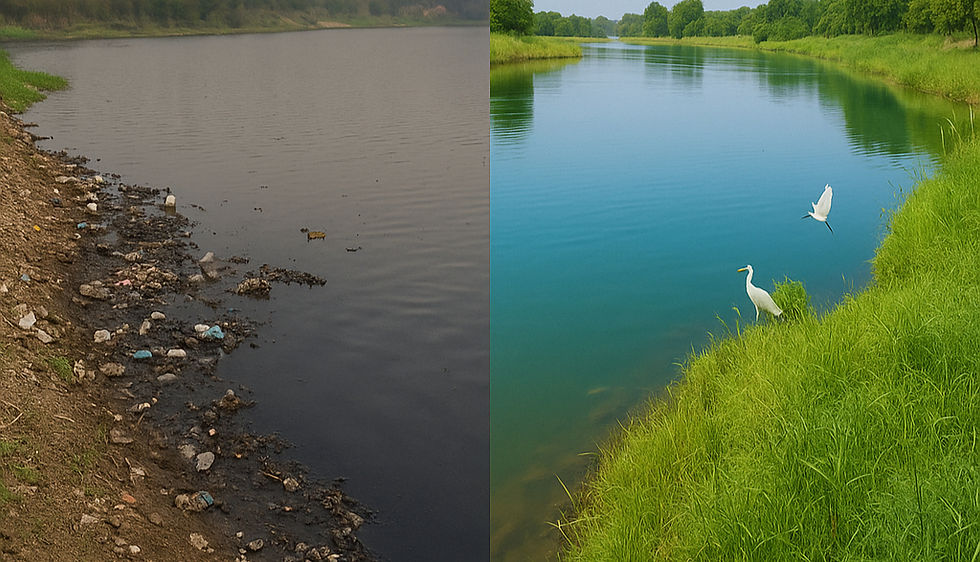
Modern sewage treatment technology is now advanced, cost-effective, and environmentally friendly.
BioSynk Bio Sewage Treatment Plant systems (as featured at https://www.biostp.co.in/sewage-treatment-plant) offer one of the most effective solutions available today.
Key benefits include:
✔ Biological treatment that mimics natural river purification
✔ Zero foul odour
✔ Low power consumption
✔ Minimal operator dependency
✔ High-quality treated water meeting CPCB standards
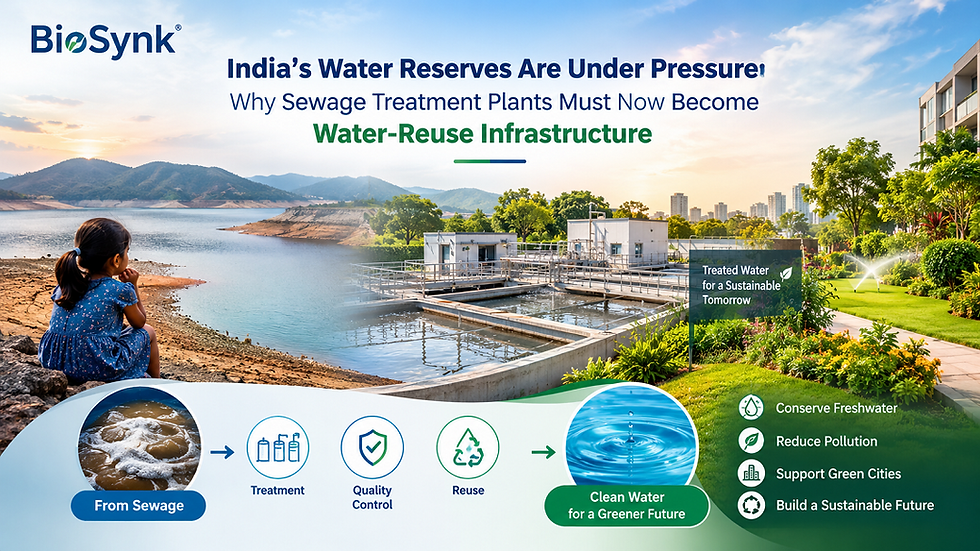
✔ Reuse potential (flushing, gardening, cooling)
✔ Low maintenance and long service life
By installing such STPs in every town, city, industrial zone, hotel, hospital, school, and residential complex along the Ganga basin, we can drastically reduce pollution at its source - before dirty water ever reaches the river.
14. Conclusion: Protecting the Ganga Is Protecting India’s Future
The Ganga River has sustained life, culture, civilization, and spirituality for thousands of years. Today, she lies at a crossroads - threatened by pollution, sewage, urbanization and unchecked industrial growth. This crisis is not hopeless - it is solvable. But only if we adopt science-based wastewater treatment, enforce regulations, invest in modern STPs like BioSynk’s, and foster public awareness. Saving the Ganga is not just an environmental mission - it is a responsibility to millions who depend on her for life, health, culture, and prosperity. The future of India’s water security depends on actions taken today.


Comments