
Kali River: History, Origin, Course, Sacred Significance, Environmental Crisis & The Only Sustainable Solution


1. Introduction: Why the Kali River Matters More Than Ever Today
The Kali River is one of Karnataka’s most ecologically important west-flowing rivers, born in the Western Ghats and flowing through dense forests, wildlife habitats, tribal regions, and coastal ecosystems before meeting the Arabian Sea. Known for its pristine beauty and biodiversity, the Kali once symbolized untouched nature and balanced coexistence between humans and forests.
Today, however, the Kali River stands at a critical crossroads. Hydropower projects, deforestation, industrial expansion, urban sewage, mining, and unregulated development have placed enormous stress on this fragile river system. What was once a free-flowing forest river is now increasingly fragmented, polluted, and weakened. Understanding the Kali River’s origin, history, sacred significance, environmental crisis, and the urgent need for scientific wastewater treatment is essential if we want to save it from irreversible damage.
2. What Is the Kali River? A Complete Explanation

The Kali River-also known as the Kalinadi-is a major west-flowing river of Karnataka. It originates in the Western Ghats and flows westward through Uttara Kannada district before draining into the Arabian Sea near Karwar. Unlike long plateau rivers, the Kali is short, fast-flowing, and extremely sensitive to ecological disturbance.
The river supports tropical rainforests, wildlife sanctuaries, agriculture, fishing communities, and coastal livelihoods. It is also a critical freshwater source for towns, industries, and power projects. Because of its steep gradient and heavy monsoon flow, even small amounts of pollution or flow disruption can cause large-scale ecological damage. The Kali is not just a river-it is a backbone of the Western Ghats ecosystem.
3. Origin of the Kali River: Where It Begins & Why It Is Sacred

The Kali River originates near Diggi village in the Western Ghats, surrounded by dense evergreen forests and high-rainfall zones. These forests act as natural water regulators, absorbing rainfall and releasing it gradually into the river system.
For local communities and forest dwellers, the river’s source is considered sacred-a symbol of life, fertility, and natural balance. Historically, the Kali’s origin region remained protected due to its remoteness and cultural respect for forests. In recent decades, however, road construction, deforestation, and human activity have begun disturbing these headwaters. When a river’s origin is damaged, every downstream ecosystem inevitably suffers.
4. Course of the Kali River: From Western Ghats to Arabian Sea

From its source, the Kali River flows westward for about 184 km, cutting through rugged terrain, deep valleys, and thick forests. Along its journey, it passes through Supa, Dandeli, Joida, and Karwar-regions rich in biodiversity and natural beauty.
The river eventually empties into the Arabian Sea, where it supports estuaries, mangroves, fisheries, and coastal livelihoods. The Kali’s journey connects mountains to the sea, forests to fisheries, and inland ecosystems to coastal balance. Any disruption upstream directly impacts marine life downstream.
5. Sacred & Cultural Significance of the Kali River

The Kali River has deep cultural and spiritual importance for the people of Uttara Kannada. Forest tribes, temple communities, and traditional settlements have lived along its banks for generations. Rituals, local festivals, and agricultural cycles are closely linked to the river’s seasonal flow.
Unlike urban rivers dominated by concrete embankments, the Kali historically flowed freely through forests, symbolizing harmony between nature and humanity. This sacred relationship is now under strain as modern development increasingly ignores ecological limits.
6. Hydropower Projects: Power Generation vs River Health
The Kali River basin hosts multiple major hydropower projects, including dams at Supa, Kodasalli, Kadra, and others. While these projects contribute significantly to Karnataka’s power supply, they have dramatically altered the river’s natural flow.
Dams fragment the river, reduce downstream discharge, trap sediments, and disrupt fish migration. During dry seasons, long stretches of the river experience reduced or stagnant flow, weakening its ability to dilute pollutants. Power generation has come at a heavy ecological cost-one that continues to grow.
7. Industries, Towns & Growing Sewage Pressure
Urban settlements, industrial units, paper mills, chemical industries, and tourism facilities along the Kali basin generate increasing volumes of wastewater. Unfortunately, sewage treatment infrastructure has not kept pace with development.
In many locations, treated water is insufficient or absent, and untreated wastewater is released into drains, streams, or directly into the river. This includes domestic sewage, industrial effluents, oils, detergents, and organic waste. Once released, these pollutants spread rapidly through the river system.
8. Environmental Crisis: How Untreated Wastewater Is Damaging the Kali River

The most dangerous threat to the Kali River today is untreated and poorly treated wastewater. Continuous discharge of sewage reduces dissolved oxygen, increases bacterial contamination, and introduces toxic substances into the water.
Signs of degradation include fish mortality, algal growth, foul smell, water discoloration, and declining aquatic biodiversity. Unlike visible deforestation, sewage pollution works silently-but relentlessly. Over time, it destroys the river’s natural self-purification ability.
9. Impact on Wildlife, Forests & Coastal Ecosystems
The Kali basin supports rich wildlife, including elephants, tigers, fish species, amphibians, birds, and insects unique to the Western Ghats. Polluted water disrupts breeding cycles and food chains.
Downstream, contaminated river water affects estuaries and coastal fisheries near Karwar. Mangroves and marine life depend on clean freshwater inflow. When polluted water reaches the sea, the damage multiplies far beyond the river itself.
10. Why Releasing Untreated Water Is the Core Problem
No river can survive continuous discharge of untreated wastewater. Even rivers flowing through dense forests lose resilience when pollution load exceeds natural limits.
The Kali River’s short length and steep gradient make it especially vulnerable. If untreated water is released outside premises-into drains, streams, or soil-it will inevitably reach the river. Stopping pollution at the source is the only effective solution.
11. The Only Sustainable Solution: Treat Wastewater Before Release
The survival of the Kali River depends on one clear principle:All wastewater must be treated before it leaves any industry, hotel, apartment, or institution.
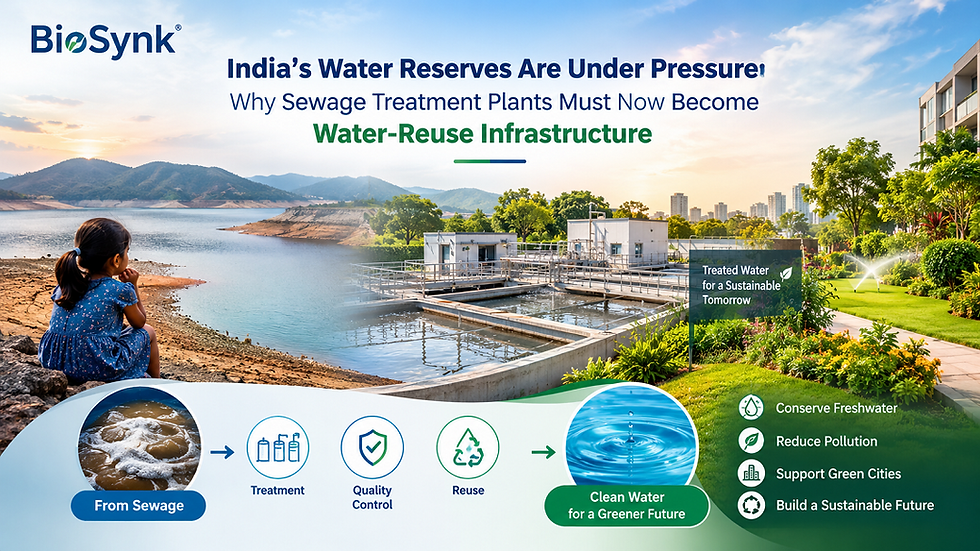
Modern biological Sewage Treatment Plants (STPs) ensure that treated water is safe for reuse or discharge without harming rivers. CPCB regulations already mandate proper wastewater treatment. Compliance is not just legal-it is ecological responsibility.
12. BioSynk: Saving the Kali River by Stopping Pollution at Source

BioSynk’s Bio STP technology provides a proven, practical, and eco-friendly solution to prevent untreated wastewater from reaching the Kali River. BioSynk systems use natural biological processes, require no skilled operator, produce no foul smell, and deliver CPCB-compliant treated water consistently.
Industries, hotels, resorts, apartments, institutions, and commercial buildings using BioSynk ensure that only treated water goes outside their premises-posing no risk to rivers.By preventing untreated discharge, BioSynk directly helps save the Kali River and other fragile Western Ghats waterways.🔗 Learn more: https://www.biostp.co.in/sewage-treatment-plant
Conclusion: Saving the Kali River Is Still Possible-If We Act Now
The Kali River is a forest river, a sacred river, and a lifeline of the Western Ghats. Allowing it to degrade due to untreated wastewater and unchecked development would be an irreversible ecological loss.
Rivers do not die suddenly-they are slowly poisoned. Treating wastewater before release is the single most powerful action we can take today. With responsible development and scientific solutions like BioSynk, the Kali River can continue to flow clean-from the Western Ghats to the Arabian Sea.
Saving rivers begins by stopping pollution at its source. BioSynk stands committed to that mission.


Great Initiative guys, You guys can team up with local government into making your biosynk utilization a mandate in every industries or hotels or commercial or residential places that release any kind of water from them. I hope you guys become successful. I'll try my best to contribute