
Bhima River: Origin, History, Sacred Journey, Civilizations, Human Impact
- MARKETING BIOSYNK
- Dec 24, 2025
- 5 min read


1. Introduction: Why the Bhima River Matters More Than Ever Today
The Bhima River is one of peninsular India’s most important lifelines-an ancient river that shaped agriculture, faith, trade, and settlement across Maharashtra, Karnataka, and Telangana. Flowing through some of the most densely populated and agriculturally productive regions of the Deccan plateau, the Bhima has sustained millions for centuries.
Yet today, this once-revered river faces unprecedented pressure. Rapid urbanization, untreated sewage, industrial discharge, water extraction, and declining rainfall have pushed the Bhima toward ecological distress. What was once a river of abundance is now struggling to maintain flow and quality. Understanding the Bhima River’s origin, historical role, sacred identity, and present-day challenges is essential if we are to protect it for future generations.
2. What Is the Bhima River? A Complete Explanation
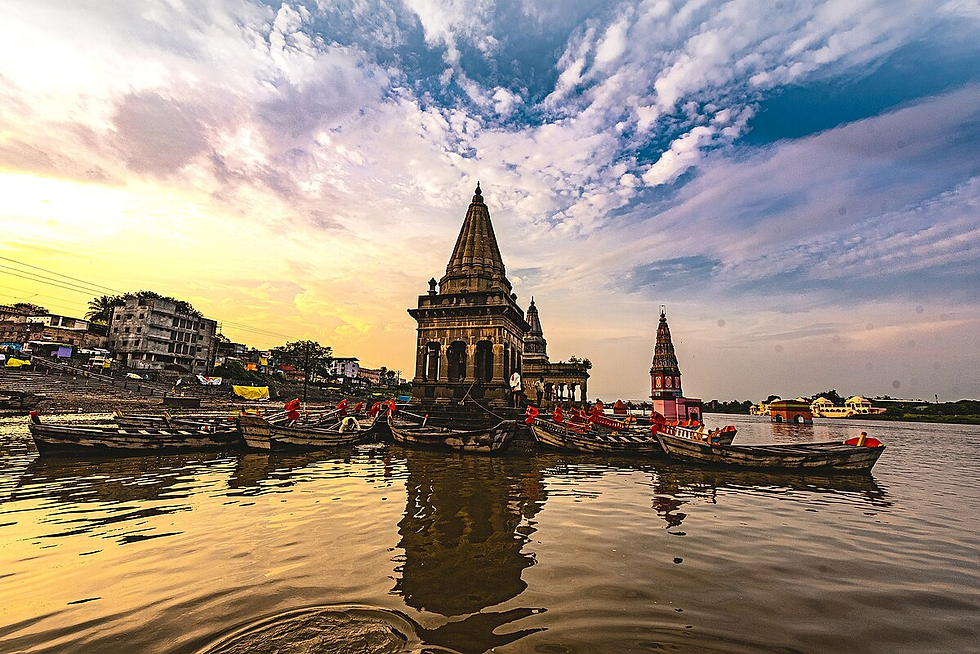
The Bhima River is a major tributary of the Krishna River and one of the longest rivers of the Deccan region. It flows predominantly east-southeast across Maharashtra before entering Karnataka and later Telangana, where it ultimately merges with the Krishna.
For centuries, the Bhima has been a backbone for irrigation, drinking water, religious activities, and economic growth. The river supports large cities, countless villages, fertile farmlands, and industrial zones. More than a geographical feature, the Bhima is an ecological system and cultural symbol that links mountains, plains, people, and faith across state boundaries.
3. Origin of the Bhima River: Where It Begins & Why It Is Sacred

The Bhima River originates in the Western Ghats near Bhimashankar, one of the twelve sacred Jyotirlingas of Lord Shiva, located in Maharashtra. This forested, high-rainfall region is not only the river’s birthplace but also a deeply spiritual landscape.
Ancient traditions describe the Bhima as a divine river born from sacred hills, carrying purity and life downstream. The dense forests around Bhimashankar historically ensured steady water flow and ecological balance. Today, deforestation, tourism pressure, and land-use change threaten these headwaters-placing the entire river system at risk from its very source.
4. The Sacred Journey of the Bhima: From Ghats to the Krishna

From its origin, the Bhima travels nearly 861 kilometers, passing through Pune, Solapur, Kalaburagi, and other major regions before joining the Krishna River. Along its journey, it receives water from important tributaries such as the Mula, Mutha, Indrayani, Sina, and Manjira.
The river supports major reservoirs and irrigation projects that feed drought-prone regions of the Deccan. However, heavy damming and over-extraction have altered natural flow patterns. Seasonal drying, reduced sediment transport, and stressed ecosystems are now common along large stretches of the Bhima.
5. Bhima River in Ancient Civilizations & History

The Bhima basin has been inhabited since prehistoric times. Ancient kingdoms, including the Satavahanas, Chalukyas, Rashtrakutas, and Yadavas, flourished along its banks. Trade routes, temple towns, and agrarian settlements developed because of the river’s dependable water supply.
In medieval times, the Bhima supported major cultural and religious movements, including the Bhakti tradition. Towns like Pandharpur-home to the revered Vitthal temple-owe their spiritual prominence to the Bhima. The river was central to social life, pilgrimage, and cultural continuity for centuries.
6. How Millions Depend on the Bhima Today

Today, more than 30 million people depend directly or indirectly on the Bhima River for drinking water, agriculture, industry, and daily life. It irrigates vast tracts of sugarcane, pulses, cereals, and oilseeds, making it one of the most economically critical rivers in Maharashtra and northern Karnataka.
Cities such as Pune and Solapur rely heavily on the Bhima and its tributaries. The river also supports fisheries, livestock, small industries, and rural livelihoods. As demand rises, the pressure on the river continues to intensify-often without matching conservation efforts.
7. Urbanization, Industries & Sewage Pressure on the Bhima

Rapid urban growth along the Bhima basin has dramatically increased wastewater generation. Municipal sewage from cities, industrial effluents from sugar mills, textile units, engineering industries, and pharmaceutical clusters are major pollution sources.
In many locations, untreated or partially treated sewage flows directly into the river or its tributaries. Industrial waste containing chemicals, oils, and heavy metals further degrades water quality. Urban development has advanced far faster than sewage treatment infrastructure-creating a dangerous imbalance.
8. Pollution Crisis: How Untreated Sewage Is Damaging the Bhima River

Several stretches of the Bhima River are now classified as critically polluted. High levels of BOD, COD, coliform bacteria, and chemical contaminants make the water unsafe for drinking and even irrigation in some areas.
Fish deaths, foul odour, algal blooms, and colour changes in the water are increasingly reported. The river’s natural self-cleansing capacity has been overwhelmed by continuous sewage inflow. Once pollution crosses a threshold, ecological recovery becomes extremely difficult without intervention.
9. Impact on Health, Agriculture & Ecology

Polluted Bhima water poses serious public health risks, including water-borne diseases and long-term exposure issues. Farmers using contaminated water face declining soil fertility and reduced crop yields.
Aquatic biodiversity has declined sharply, affecting fishing communities and food chains. Groundwater contamination spreads pollution far beyond the riverbanks, affecting wells and borewells across entire regions. The cost of pollution is paid not only by the river-but by society as a whole.
10. Why Untreated Wastewater Is the Bhima’s Biggest Enemy

Among all threats, untreated wastewater remains the most destructive. Unlike visible encroachments, sewage pollution works silently and continuously. Every untreated outlet adds to a cumulative load that the river cannot process.
Without stopping sewage at the source, no river rejuvenation effort can succeed. For a heavily utilized river like the Bhima, wastewater treatment is not optional-it is fundamental to survival.
11. The Only Way Forward: Scientific Sewage Treatment
Protecting the Bhima River requires immediate action focused on wastewater management. Modern biological Sewage Treatment Plants (STPs) ensure that sewage and effluents are treated before reaching natural drains or river channels.
CPCB regulations now mandate STPs for industries, commercial establishments, residential complexes, institutions, and hospitality units. Treating wastewater at the point of generation is the most effective way to reduce pollution load and restore river health.
12. BioSynk: The Only Practical & Sustainable Solution

BioSynk’s Bio STP technology offers a reliable, eco-friendly, and cost-effective solution for wastewater treatment across the Bhima basin. Designed for Indian operating conditions, BioSynk systems require no skilled operator, produce no foul smell, and deliver CPCB-compliant treated water consistently.
Suitable for industries, sugar mills, hotels, apartments, hospitals, and commercial complexes, BioSynk prevents thousands of litres of untreated sewage from entering the Bhima every day.Learn more: https://www.biostp.co.in/sewage-treatment-plant
Conclusion: Saving the Bhima Is a Responsibility We Cannot Delay
The Bhima River is not just a water source-it is history, faith, economy, and life itself. Allowing it to deteriorate due to untreated wastewater and unchecked development would be an irreversible loss.
With scientific sewage treatment, responsible governance, and collective participation, the Bhima can still be protected. The choices we make today will decide whether future generations inherit a living river-or a polluted channel.
BioSynk stands committed to being part of the only way forward: stopping pollution before it reaches our rivers.


Comments