
This One Technology Can Solve India’s Water Crisis — Why Isn’t Everyone Using It?


Introduction: A Crisis We Can No Longer Ignore
India is standing at the edge of a silent disaster—one that doesn’t make daily headlines but affects millions every single day. Water scarcity is no longer a distant fear; it is a present reality. Cities are expanding, populations are rising, and freshwater resources are shrinking at an alarming rate.
Yet, what’s even more shocking is this:While we struggle to find clean water, millions of liters of wastewater are being wasted daily.
This isn’t just mismanagement. It’s a systemic failure.
Across urban and rural India, untreated sewage flows into rivers, lakes, and groundwater. The same water eventually comes back into our homes—contaminated, unsafe, and dangerous.
But here’s the truth most people don’t realize:We already have the technology to fix this.
So why isn’t everyone using it?
What Is This “One Technology”?
The answer is simple, yet powerful:
👉 Sewage Treatment Plants (STPs) — especially modern Bio STP systems
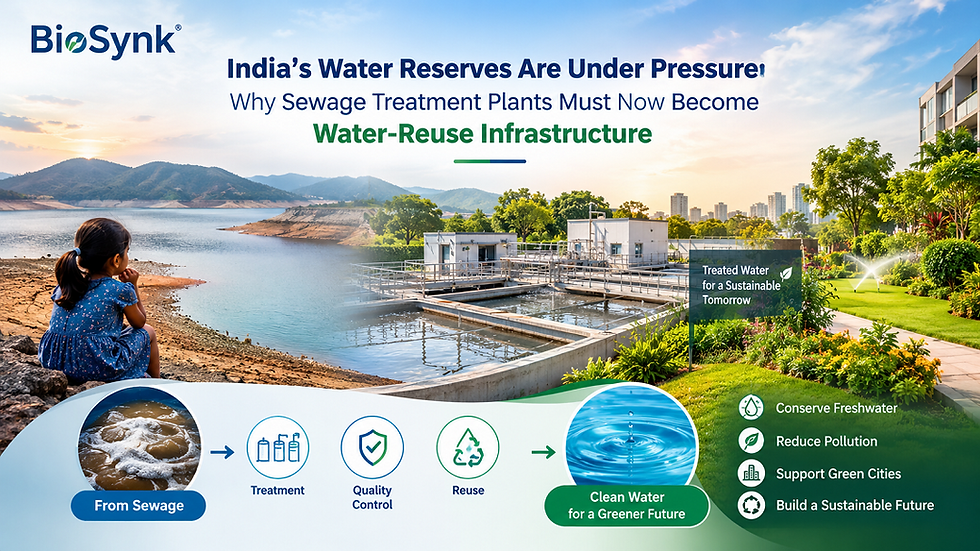
A sewage treatment plant is designed to treat wastewater and convert it into reusable water. Instead of letting sewage pollute our environment, STPs clean it to a level where it can be reused for:
Gardening
Flushing
Cooling systems
Industrial processes
Groundwater recharge
Modern Bio STPs go a step further. They use biological processes and eco-friendly methods to treat water efficiently, with:
Lower power consumption
Minimal sludge generation
No harmful chemicals
Compact design for urban spaces
This is not just a solution.It’s a transformation of waste into value.
The Growing Threat of Untreated Sewage in India
India generates over 70% more sewage than it can treat. That means the majority of wastewater goes untreated.
Let that sink in.
What happens when sewage is not treated?
Rivers become toxic
Groundwater gets contaminated
Borewells turn unsafe
Diseases spread rapidly
Entire ecosystems collapse
Many areas today are facing a terrifying reality—borewell water that smells like sewage.
This is not a future prediction.This is already happening.
And the biggest contributors?
Residential apartments without proper STPs
Small industries bypassing treatment systems
Municipal systems overloaded beyond capacity
Why Cities Are Failing Without Sewage Treatment
Urban India is growing fast—but infrastructure is not keeping up.
Most cities rely on centralized sewage systems. But:
Pipelines are outdated
Treatment plants are insufficient
Illegal discharge is common
This leads to one unavoidable conclusion:
👉 Centralized systems alone cannot solve India’s water crisis
We need decentralized sewage treatment—at the source.
That means:
Every apartment
Every commercial building
Every industrial unit
…must take responsibility.
How Sewage Treatment Plants Can Solve the Water Crisis
Now let’s address the big claim:
Can STPs really solve India’s water crisis?
Yes—and here’s how:
1. Water Recycling at Scale
Instead of wasting water, STPs allow reuse of up to 90% of wastewater.
2. Reduced Freshwater Demand
Less dependency on borewells and tanker water.
3. Groundwater Protection
Prevents contamination and allows recharge.
4. Sustainable Urban Growth
Cities can grow without exhausting water resources.
5. Environmental Restoration
Cleaner rivers, healthier ecosystems.
This isn’t theory.It’s already working—wherever implemented properly.
Then Why Isn’t Everyone Using It?
This is the most important question.
If the solution exists… why isn’t it everywhere?
❌ 1. Lack of Awareness
Many people still don’t understand the importance of sewage treatment.
❌ 2. Poor Implementation
Old, inefficient STPs create a bad reputation.
❌ 3. Cost Misconceptions
People assume STPs are expensive—without understanding long-term savings.
❌ 4. Compliance Ignorance
Builders and industries often ignore regulations until penalties hit.
❌ 5. Maintenance Issues
Improper operation leads to system failure.
Why Traditional STPs Failed (And What’s Changing Now)
Let’s be honest—older STPs didn’t always work well.
Common problems included:
High electricity consumption
Frequent breakdowns
Bad odor
Complex operation
Sludge disposal issues
This led to a perception:
👉 “STPs don’t work.”
But that’s outdated thinking.
Modern Bio STPs have changed everything:
Automated systems
Odor-free operation
Low maintenance
Energy-efficient design
Long-term reliability
The technology has evolved.The mindset hasn’t—yet.
The Hidden Financial Benefits of STPs
Most people see STPs as a cost.
Smart decision-makers see them as an investment.
💸 Here’s why:
Reduced water tanker expenses
Lower operational costs over time
Increased property value
Avoidance of government penalties
Long-term sustainability savings
In many cases, STPs pay for themselves within a few years.
Government Regulations Are Getting Stricter
Across India, environmental regulations are tightening.
Authorities are now making STPs:
Mandatory for apartments
Mandatory for industries
Mandatory for commercial buildings
Failure to comply can lead to:
Heavy fines
Legal action
Project shutdowns
The message is clear:
👉 Sewage treatment is no longer optional
Environmental Impact: Beyond Just Water
Installing a sewage treatment plant doesn’t just solve water issues.
It creates a ripple effect:
Reduces pollution
Protects biodiversity
Improves air quality
Supports sustainable development
This is not just engineering.This is environmental responsibility.
🏢 Who Needs a Sewage Treatment Plant?
If you fall into any of these categories, you need an STP:
Apartment builders
Gated communities
Hotels & resorts
Hospitals
Industries
IT parks
Commercial complexes
In short:
👉 If you generate wastewater, you need a solution
Choosing the Right Sewage Treatment Solution
Not all STPs are equal.
When selecting a system, consider:
Technology type (Bio STP preferred)
Space availability
Power consumption
Maintenance requirements
Compliance standards
A poorly designed system will fail.
A well-designed system will run for decades.
The Bigger Picture: India’s Future Depends on This
India’s water crisis is not just about scarcity.
It’s about mismanagement.
We are not running out of water.We are failing to reuse it.
Imagine a future where:
Every building recycles its own water
Rivers flow clean again
Groundwater is restored
Cities become sustainable
This is not impossible.
It is already achievable—with the right technology.
Why Bio STP Is the Smartest Choice Today
Among all available technologies, Bio STP stands out because it is:
Eco-friendly
Cost-effective
Efficient
Scalable
Future-ready
It aligns perfectly with India’s sustainability goals.
And more importantly—
👉 It actually works.
The Real Question: Why Are You Still Waiting?
By now, the truth is clear:
The problem is real
The solution exists
The benefits are proven
So the only question left is:👉 Why delay?
Every day without proper sewage treatment:
More water is wasted
More pollution spreads
More damage is done
Let’s Build a Water-Secure India — Together
Water is not just a resource.It is life.
And protecting it is not the government’s job alone.
It is our collective responsibility.
If we want clean water tomorrow,we must treat our wastewater today.
Take the First Step Today
If you are planning a project, managing a property, or running an industry—
👉 The smartest decision you can make today is installing the right sewage treatment system.
Explore sustainable, high-performance solutions here:
Final Thought
India doesn’t need more water.
India needs better water management.
And the solution is already in our hands.
Sewage treatment is not just technology.It is the future of survival.


Comments