
This One Technology Can Solve India’s Water Crisis — Why Isn’t Everyone Using It?


Detailed Introduction: A Crisis We Can No Longer Ignore
India is standing at the edge of a massive water disaster—and the truth is uncomfortable.
Every day, millions of litres of water flow through our homes, apartments, industries, and cities. We use it, we pollute it, and then… we throw it away. What happens next is the real problem.
According to recent reports, only about 28% of India’s wastewater is treated, while nearly 72% is released untreated into rivers, lakes, and land . That means the majority of our sewage is directly polluting the very water sources we depend on.
At the same time, India is facing severe water scarcity. Groundwater levels are falling. Borewells are drying. Tanker costs are rising every year.
Now here’s the shocking part:
👉 We are not running out of water. We are wasting it.
There is already a powerful solution available—a technology that can recycle wastewater, reduce dependency on freshwater, and create a sustainable water future.
That technology is the Sewage Treatment Plant (STP).
So if the solution exists…Why isn’t everyone using it?
💧 What Is This “One Technology”? – Sewage Treatment Plants (STP)
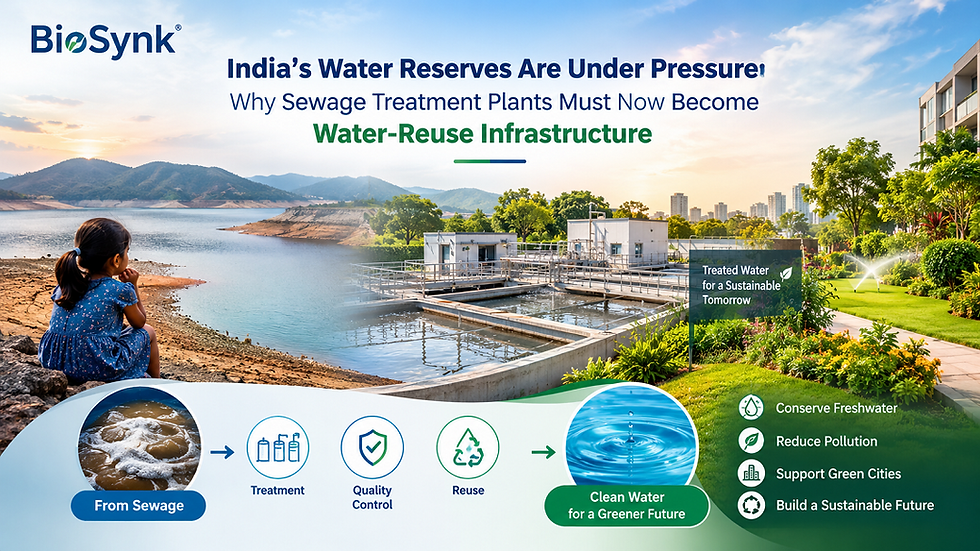
A Sewage Treatment Plant (STP) is a system that treats wastewater from homes, apartments, commercial buildings, and industries.
Instead of letting sewage pollute rivers, an STP:
Removes harmful contaminants
Treats water biologically and chemically
Converts wastewater into reusable water
The treated water can be reused for:
Gardening 🌱
Flushing 🚽
Cooling systems 🏭
Industrial reuse ⚙️
👉 If implemented properly, STPs can reduce freshwater demand by up to 50–80%.
If you want a complete technical understanding, check here:
👉 Sewage Treatment Plant Solutions (replace with your actual page URL when publishing)
🚨 The Real Problem: India Is Not Facing Water Shortage—It’s Facing Water Mismanagement
Let’s break the reality:
India generates over 72,000 million litres of wastewater daily
Most of it is not treated
Rivers are turning into sewage channels
Groundwater is getting contaminated
And yet, if all this wastewater was treated and reused:
👉 India could significantly reduce its water crisis and even add nearly 29% back to its usable water supply
This is not a future solution.This is a present opportunity being ignored.
🧠 Why Isn’t Everyone Using STPs Yet? (The Hard Truth)
If STPs are so powerful, why aren’t they everywhere?
1. Lack of Awareness
Most builders, industries, and even government bodies don’t fully understand the potential of wastewater reuse.
2. Poor Design & Old Technology
Traditional STPs:
Consume high power ⚡
Produce bad odor 🤢
Require heavy maintenance
So people lose trust in the system.
3. “Cost” Misconception
Many think STPs are expensive.But in reality:
👉 Not installing one leads to higher tanker costs, fines, and long-term losses.
4. Weak Enforcement
Although regulations exist, enforcement is inconsistent in many regions.
5. Wrong Vendors & Execution Failures
Bad design + poor maintenance = failed STPsThis creates a negative perception across the market.
🌱 The Turning Point: Why STPs Are Becoming Mandatory in 2026
The situation is changing fast.
Pollution control boards are tightening norms
Builders are required to install STPs for approvals
Industries must comply with discharge standards
Water reuse is becoming a national priority
👉 The government is already pushing cities to reuse at least 20% of water
This means one thing:
⚠️ STP is no longer optional. It is becoming compulsory.
⚙️ Modern Bio STP: The Game-Changer Technology
Not all STPs are the same.
Modern Bio STP systems solve the biggest problems of conventional plants:
✔ Low power consumption
✔ No foul smell
✔ Compact design
✔ Easy maintenance
✔ High treatment efficiency
These systems use advanced biological processes to break down waste naturally.
👉 This is why Bio STP is now the preferred choice for apartments, industries, hotels, and commercial buildings.
💰 The Hidden Economic Benefit: Turning Waste into Value
Installing an STP is not an expense—it’s an investment.
Here’s how:
Reduce water tanker dependency 🚛
Save lakhs per year 💸
Increase property value 🏢
Ensure legal compliance 📜
Improve brand reputation 🌍
Imagine this:
Instead of buying water…
👉 You create your own water supply.
That’s the real power of STP.
🌍 Environmental Impact: Saving Rivers Starts Here
Every untreated drop of sewage:
Pollutes rivers
Destroys ecosystems
Causes diseases
Cities like Delhi, Nagpur, and others are already struggling with sewage pollution issues.
But here’s the hopeful truth:
👉 Every STP installed is a step toward cleaner rivers, healthier groundwater, and a sustainable India.
This is not just infrastructure.This is environmental responsibility.
🏗️ Why You Must Install an STP Today (Not Tomorrow)
If you are:
A builder 🏢
Industrial owner 🏭
Apartment association 🏘️
Commercial property developer
Then delaying STP installation is risky.
Because:
❌ Water costs will rise
❌ Regulations will become stricter
❌ Groundwater will become unusable
But if you act now:
✔ You stay ahead of compliance
✔ You save long-term costs
✔ You future-proof your property
🚀 Why Choose BioSynk STP Solutions
At BioSynk, we don’t just install STPs—we solve water problems.
👉 Our solutions focus on:
High-efficiency treatment
Low operational cost
Odor-free systems
Customized design for each project
We understand Indian conditions—And we build systems that actually work.
👉 Explore our complete solution here:
🇮🇳 Let’s Build a Water-Secure India, Together
India doesn’t lack water.
India lacks water management.
And the solution is already in our hands.
👉 Treat wastewater
👉 Reuse water
👉 Reduce dependency
👉 Restore nature
The question is no longer:
“Can this technology solve India’s water crisis?”
The real question is:
👉 “How long will we ignore it?”
🔥 Final Thought (Powerful Closing Line)
The future of water is not in finding new sources…
It’s in reusing what we already have.


Comments