
The Sewage Emergency Nobody Talks About: Protecting Public Health Through Better Wastewater Treatment


Introduction: The Crisis Flowing Beneath Our Feet
Every day, millions of litres of wastewater disappear down toilets, kitchen sinks, showers, and industrial drains. Once it leaves our homes and workplaces, most of us stop thinking about it. Yet this "out of sight, out of mind" approach has created one of the biggest environmental and public health challenges of our time.
India is facing a silent sewage emergency. Rapid urbanization, population growth, ageing infrastructure, and inadequate treatment facilities have resulted in enormous quantities of untreated or poorly treated wastewater entering rivers, lakes, groundwater sources, and even residential areas.
The alarming reality is that sewage pollution is no longer just an environmental issue. It has become a public health crisis affecting communities, ecosystems, and future water security.
Understanding the Hidden Threat of Sewage Water
Sewage water contains a complex mixture of contaminants, including:
Human waste and pathogens
Disease-causing bacteria and viruses
Chemical pollutants
Household detergents and oils
Pharmaceutical residues
Nutrients such as nitrogen and phosphorus
Suspended solids and organic matter
When this wastewater is not treated properly, it creates a chain reaction of health and environmental problems that extend far beyond the drainage system.
The Current Sewage Situation in India
India generates billions of litres of wastewater every day, but a significant portion still goes untreated.
Recent reports indicate that large volumes of treated water are not effectively reused, while untreated sewage continues to enter natural water bodies. In some regions, authorities have been criticized for discharging treated water into drains instead of maximizing its reuse potential.
This situation highlights a critical gap:
Building treatment infrastructure alone is not enough. Proper operation, maintenance, and water reuse strategies are equally important.
Public Health Risks Associated with Untreated Sewage
1. Spread of Waterborne Diseases
Contaminated water contributes to diseases such as:
Cholera
Typhoid
Dysentery
Hepatitis A
Gastroenteritis
Children, elderly individuals, and people with weakened immune systems are particularly vulnerable.
2. Mosquito Breeding and Vector-Borne Illnesses
Stagnant sewage creates ideal breeding grounds for mosquitoes, increasing the risk of:
Dengue fever
Malaria
Chikungunya
3. Antibiotic Resistance
Hospital and pharmaceutical wastewater can contain antibiotic residues. Poor wastewater treatment may contribute to the spread of antibiotic-resistant microorganisms.
4. Contamination of Drinking Water Sources
Leakages and cross-connections between sewage lines and drinking water pipelines can lead to serious public health emergencies.
Environmental Consequences of Sewage Pollution
The impact extends far beyond human health.
River Pollution
Untreated sewage reduces oxygen levels in rivers, harming aquatic life and destroying ecosystems.
Groundwater Contamination
Improper disposal allows pollutants to seep into underground aquifers, threatening drinking water supplies.
Soil Degradation
Excess nutrients and chemicals can alter soil composition and reduce agricultural productivity.
Loss of Biodiversity
Fish populations decline, aquatic habitats deteriorate, and ecological balance is disrupted.
Why Traditional Wastewater Practices Are Failing
Several factors contribute to the growing crisis:
Rapid Urban Expansion
Cities are expanding faster than sewage infrastructure can accommodate.
Inadequate Treatment Capacity
Existing treatment plants may not handle increasing wastewater volumes efficiently.
Poor Maintenance
Many facilities struggle due to operational inefficiencies and insufficient monitoring.
Lack of Water Reuse Planning
Treated wastewater is often discharged instead of being reused for beneficial purposes.
The Role of Sewage Treatment Plants in Public Health Protection
A properly designed Sewage Treatment Plant (STP) serves as the first line of defence against wastewater-related health risks.
Modern STPs help by:
Removing harmful pathogens
Reducing organic pollution
Eliminating suspended solids
Improving water quality
Supporting safe water reuse practices
Protecting ecosystems and communities
Without effective treatment systems, the burden on healthcare systems and environmental resources continues to grow.
Why Bio STPs Are Becoming the Preferred Solution
Conventional systems often require extensive maintenance and large footprints.
Bio STPs offer a more sustainable alternative.
Key Advantages of Bio STPs:
Eco-Friendly Operation
Biological treatment processes naturally break down contaminants.
Reduced Odour Generation
Advanced treatment minimizes unpleasant smells commonly associated with sewage facilities.
Lower Operational Costs
Efficient designs help reduce long-term expenditure.
Space Optimization
Compact systems are suitable for residential, commercial, and institutional applications.
Regulatory Compliance
Bio STPs can help organizations meet environmental standards and wastewater discharge norms.
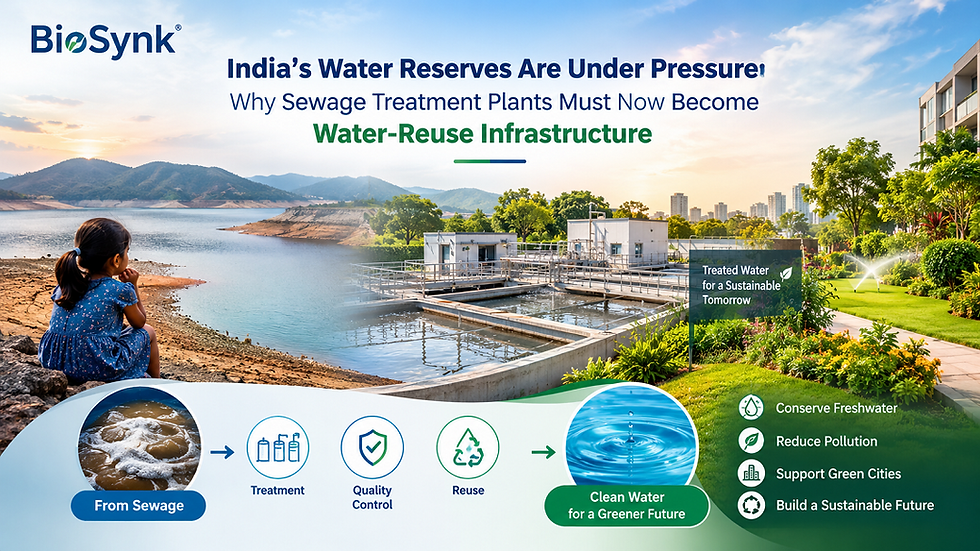
Water Reuse Opportunities
Treated water can often be reused for:
Landscaping
Toilet flushing
Cooling systems
Gardening
Construction activities
Industries and Facilities That Need Sewage Treatment Solutions
Effective wastewater treatment is essential for:
Residential apartments
Gated communities
Hotels and resorts
Hospitals and healthcare facilities
Educational institutions
Commercial buildings
Manufacturing industries
Corporate campuses
As environmental regulations continue to evolve, wastewater management is becoming a critical operational requirement.
The Economic Value of Treating Wastewater
Wastewater should no longer be viewed solely as waste.
When treated properly, it becomes a valuable resource.
Benefits include:
Reduced freshwater demand
Lower water procurement costs
Enhanced sustainability credentials
Improved regulatory compliance
Better community relationships
Increased resilience during water shortages
The future of water management lies in circular resource utilization.
What Businesses and Communities Must Do Today
To address the sewage emergency effectively, organizations should:
Conduct wastewater assessments.
Understand the volume and characteristics of wastewater generated.
Upgrade outdated systems.
Invest in modern treatment technologies capable of meeting current requirements.
Prioritize preventive maintenance.
Routine inspections improve performance and reliability.
Implement reuse strategies.
Maximize the value of treated water.
Create awareness.
Educate employees, residents, and stakeholders about responsible wastewater practices.
Bio SYNK: Building a Cleaner and Healthier Future
At Bio SYNK, we believe that wastewater treatment is not merely about compliance—it is about protecting people, preserving ecosystems, and ensuring long-term water security.
Our innovative Bio STP solutions are designed to provide:
Efficient sewage treatment
Sustainable operation
Reduced environmental impact
Reliable performance
Customized solutions for diverse sectors
Whether you manage a residential community, healthcare facility, commercial establishment, or industrial unit, investing in effective wastewater treatment is an investment in public health and environmental stewardship.
Learn more about our sewage treatment solutions here:
Conclusion: The Time for Action Is Now
The sewage emergency may be largely invisible, but its consequences are becoming impossible to ignore.
Every untreated discharge, every neglected treatment system, and every missed opportunity for water reuse adds to a growing crisis that affects us all.
Protecting public health requires more than reactive measures. It demands proactive investment in better wastewater infrastructure, smarter technologies, and a collective commitment to sustainability.
Clean water begins with responsible wastewater management.
The question is no longer whether we can afford to improve sewage treatment.
The real question is:
Can we afford not to?


Comments