
How Garment Factories Can Save Water and Money with Water Recycling


The garment manufacturing industry is one of the largest contributors to economic growth and employment worldwide. From spinning and weaving to dyeing, washing, finishing, and garment production, every stage requires significant amounts of water. However, with increasing water scarcity, stricter environmental regulations, and rising operational costs, factories can no longer afford to rely solely on freshwater.
Water is not just a utility in garment manufacturing—it is a critical production resource. Every litre wasted increases operating expenses, puts pressure on natural water sources, and contributes to environmental pollution. As industries move toward sustainable manufacturing, water recycling has become one of the most effective ways to reduce costs, conserve freshwater, and improve long-term business performance.
Modern Sewage Treatment Plants (STPs) and wastewater recycling systems enable garment factories to treat used water and reuse it for various industrial applications. This approach not only reduces dependence on freshwater but also helps factories meet environmental compliance requirements while strengthening their sustainability goals. Across the textile sector, water reuse is increasingly recognised as both an environmental necessity and a sound business investment.
Why Water Is So Important in Garment Manufacturing
Water plays a vital role in almost every stage of garment production.
It is commonly used for:
Fabric dyeing
Washing garments
Bleaching
Chemical processing
Printing
Boiler operations
Cooling systems
Equipment cleaning
Floor cleaning
Gardening and landscaping
Toilet flushing
Employee facilities
Large garment factories may consume thousands of litres of water every day. Without proper treatment and recycling, this water is discharged as wastewater, creating environmental and financial challenges.
The Growing Water Challenge
Freshwater resources are becoming increasingly limited due to:
Population growth
Climate change
Groundwater depletion
Urbanisation
Industrial expansion
Irregular rainfall
Many industrial regions now experience seasonal water shortages. Water tanker costs continue to rise, and governments are encouraging industries to adopt water conservation and wastewater reuse practices.
Factories that continue relying only on freshwater may face increasing operational costs in the future.
How Water Waste Affects Garment Factories
Water wastage impacts factories in several ways.
Higher Water Bills
The more freshwater consumed, the higher the monthly utility expenses.
Increased Wastewater Disposal Costs
Every litre discharged requires treatment before disposal.
Rising Production Costs
Water-intensive operations directly increase manufacturing expenses.
Environmental Impact
Untreated wastewater can pollute rivers, lakes, and groundwater.
Regulatory Challenges
Environmental authorities require industries to meet wastewater discharge standards before releasing treated water.
Understanding Industrial Wastewater
Garment manufacturing wastewater typically contains:
Fabric dyes
Detergents
Bleaching chemicals
Organic matter
Suspended solids
Oil and grease
Chemical residues
Colour pigments
Salts
Process chemicals
If this wastewater is discharged untreated, it can affect aquatic ecosystems, reduce water quality, and increase environmental pollution.
Proper treatment is essential before discharge or reuse.
What Is Water Recycling?
Water recycling is the process of collecting wastewater, treating it through advanced treatment systems, and reusing it for suitable non-potable industrial applications.
Instead of disposing of wastewater after a single use, factories can recover valuable water for repeated use.
This supports a circular approach where water remains in the production cycle for longer, reducing dependence on freshwater sources.
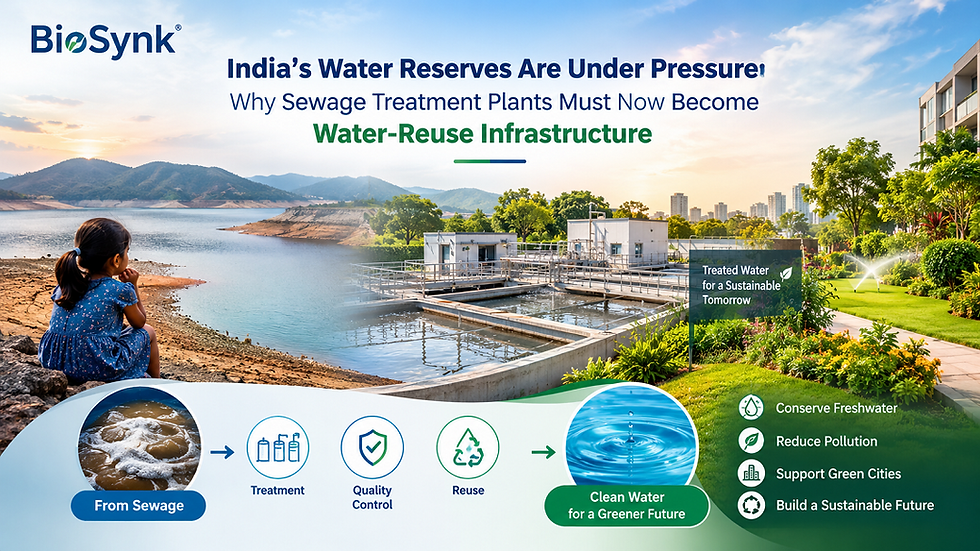
How a Sewage Treatment Plant Supports Water Recycling
An advanced Sewage Treatment Plant (STP) treats wastewater using biological, physical, and filtration processes to remove contaminants and improve water quality.
A typical treatment process includes:
Collection
Wastewater is collected from production units and facility operations.
Primary Treatment
Large particles and suspended solids are removed.
Biological Treatment
Beneficial microorganisms naturally break down biodegradable organic matter.
Clarification
Remaining suspended particles settle out.
Filtration
Fine impurities are removed through filtration.
Disinfection
The treated water is disinfected before being reused for approved applications.
The treated water can then be reused for many industrial purposes, reducing freshwater demand and supporting sustainable operations.
For more information about advanced sewage treatment solutions, visit:
Where Recycled Water Can Be Used in Garment Factories
Properly treated recycled water can be used for:
Toilet flushing
Floor cleaning
Gardening
Landscape irrigation
Vehicle washing
Cooling towers
Dust suppression
Utility operations
Equipment cleaning
Selected industrial processes where water quality requirements are met
Using recycled water for these applications allows factories to reserve freshwater for processes where higher-quality water is essential.
Benefits of Water Recycling
Reduce Freshwater Consumption
Recycling significantly lowers dependence on municipal or groundwater supplies.
Lower Operating Costs
Reduced freshwater purchase and wastewater disposal help lower recurring expenses.
Improve Water Security
Factories become less vulnerable to water shortages and supply disruptions.
Support Environmental Compliance
Proper wastewater treatment helps industries meet environmental standards.
Protect Natural Resources
Every litre of recycled water helps conserve rivers, lakes, and groundwater.
Improve Brand Reputation
Global buyers increasingly value suppliers with sustainable manufacturing practices.
Sustainability Is Becoming a Business Requirement
Many international apparel brands now expect suppliers to demonstrate responsible environmental practices, including water conservation and wastewater management.
Factories that invest in water recycling can strengthen their sustainability credentials while improving long-term competitiveness. Industry initiatives have shown that water-efficiency programmes can save billions of litres of freshwater and substantially reduce wastewater generation each year.
Water Recycling Improves Business Efficiency
A factory that recycles water experiences benefits beyond environmental protection.
These include:
Improved resource management
Reduced dependence on external water sources
Better operational planning
Increased resilience during drought conditions
Lower long-term operating costs
Greater investor and customer confidence
Water recycling is no longer viewed simply as an environmental initiative—it is an operational efficiency strategy.
The Future of Garment Manufacturing
The garment industry is moving towards:
Sustainable manufacturing
Circular water management
Cleaner production
Resource efficiency
Environmental responsibility
Smart wastewater treatment
Recent studies show that textile manufacturers adopting water recycling technologies can dramatically reduce freshwater demand while maintaining production efficiency.
Why Choose Bio Synk Sewage Treatment Plants?
Bio Synk provides advanced Sewage Treatment Plant (STP) solutions designed to help garment factories, textile units, commercial facilities, residential communities, institutions, and industries manage wastewater efficiently.
Our solutions are designed to help businesses:
Reduce freshwater consumption
Recycle treated wastewater
Lower operational costs
Improve environmental performance
Support sustainable manufacturing
Meet wastewater management requirements
With advanced biological treatment technology, Bio Synk transforms wastewater into a reusable resource, helping industries move towards a greener and more efficient future.
Conclusion
Water is becoming one of the most valuable resources for modern industries. For garment factories, every litre saved translates into lower operating costs, improved sustainability, and stronger long-term competitiveness.
Instead of treating wastewater as a disposal problem, factories can transform it into a valuable resource through advanced Sewage Treatment Plants (STPs) and water recycling systems. By reducing freshwater consumption, lowering wastewater discharge, and reusing treated water wherever possible, garment manufacturers can build resilient, environmentally responsible operations while contributing to a more water-secure future.
Investing in water recycling today is not just an environmental responsibility—it is a smart business decision that delivers lasting financial and operational benefits.


Comments