
Cauvery Pollution Crisis: Why India Must Act Now on Industrial Wastewater Treatment


The Cauvery River is once again at the centre of an important environmental discussion—not only because of water sharing, but because of the growing need to protect the quality of the water itself.
On 14 August 2026, Tamil Nadu’s Water Resources Department was reported to be preparing a Detailed Project Report (DPR) aimed at tackling pollution in the Cauvery, Vaigai and Tamirabarani rivers. The plan follows an allocation of ₹25 crore in the revised Budget and focuses on identifying pollution sources and preventing untreated waste from reaching the rivers.
One of the most important issues highlighted in the report is the direct discharge of untreated industrial effluents and domestic sewage into water bodies. The proposed approach includes sewerage systems, effluent treatment plants, solid-waste management and other measures to improve river water quality.
This development raises a much bigger question for India:
How can industries, businesses, residential communities and cities grow without putting increasing pressure on our rivers and freshwater resources?
The answer begins with responsible wastewater treatment.
The Cauvery Is More Than a River
The Cauvery is one of South India’s most important water resources. Its water supports drinking-water requirements, agriculture, industries and ecosystems across Karnataka and Tamil Nadu.
That makes protecting the river’s water quality just as important as ensuring sufficient water availability.
India’s water challenges are no longer limited to water scarcity. Water pollution and water scarcity are increasingly connected.
When untreated sewage and industrial wastewater enter rivers, the available freshwater becomes more difficult and expensive to use. Pollution can increase the treatment burden for downstream water users while damaging aquatic ecosystems.
Recent reporting on the Cauvery highlights the concern around untreated industrial effluents and domestic sewage entering the river system.
Industrial Wastewater Is a Major Part of the Problem
Industries use water for a wide variety of processes, including:
Manufacturing
Washing and cleaning
Cooling
Processing
Food production
Textile and dyeing operations
Chemical processing
Pharmaceutical manufacturing
Paper production
Hospitality and commercial operations
After these activities, the resulting wastewater can contain organic matter, suspended solids, oils, chemicals, nutrients and other pollutants, depending on the industry.
If wastewater is released without appropriate treatment, it can place a significant pollution burden on nearby drains, canals, lakes and rivers.
This is why wastewater treatment cannot be treated as an optional environmental activity.
It needs to become part of the core infrastructure of responsible industrial development.
Why Untreated Wastewater Is Dangerous
Untreated wastewater can affect water bodies in several ways.
1. It Reduces Water Quality
Organic pollution can increase the amount of oxygen required for decomposition. This can reduce dissolved oxygen availability and negatively affect aquatic life.
2. It Can Damage Aquatic Ecosystems
Wastewater containing excessive nutrients, chemicals or other contaminants can disturb natural aquatic ecosystems.
3. It Can Affect Agriculture
Where polluted water enters irrigation systems, water quality can become a serious concern for agricultural communities.
4. It Increases Downstream Treatment Costs
Pollution does not simply disappear when wastewater enters a river. The contamination can move downstream, increasing the challenge of treating water for other uses.
5. It Wastes a Valuable Resource
Wastewater is not always simply “waste.”
With appropriate treatment, water can potentially be recovered and reused for suitable non-potable applications, reducing dependence on freshwater.
Sewage Pollution and Industrial Pollution Are Different
An important point is that STP and ETP systems are not identical.
A Sewage Treatment Plant (STP) is primarily designed to treat domestic sewage generated from sources such as:
Apartments
Residential communities
Hotels
Hospitals
Schools and colleges
Commercial buildings
Offices
Institutions
An Effluent Treatment Plant (ETP) is designed to treat wastewater generated by industrial processes.
The characteristics of industrial wastewater can vary significantly from one industry to another. Therefore, treatment should be designed according to the quality and quantity of wastewater generated by the specific process.
For industrial facilities, appropriate wastewater treatment may involve multiple treatment stages, depending on the contaminants present.
Why Every Industry Needs a Proper Wastewater Strategy
A responsible industrial wastewater strategy should begin before the plant is installed.
The first step is understanding:
How much wastewater is generated?
Then comes the more important question:
What is actually present in that wastewater?
A wastewater assessment can help determine parameters such as:
pH
BOD
COD
TSS
TDS
Oil and grease
Nutrients
Industry-specific contaminants
Once the wastewater characteristics are understood, an appropriate treatment approach can be developed.
This is much better than installing a generic treatment system without understanding the actual wastewater being produced.
STP and ETP Plants Are Part of the Solution
The latest Cauvery pollution discussion highlights the need for stronger wastewater infrastructure.
For domestic sewage, STPs can help prevent untreated sewage from reaching rivers and other water bodies.
For industrial wastewater, ETPs can provide treatment before the wastewater is discharged or considered for appropriate reuse.
The Tamil Nadu Water Resources Department's reported plan specifically includes establishing sewerage and effluent treatment plants as part of its wider approach to reducing pollution in the rivers.
This is an important direction because river restoration cannot depend only on cleaning the river after pollution has already occurred.
Pollution prevention must happen at the source.
Treatment Alone Is Not Enough—Reuse Matters Too
India is also moving towards a more important concept:
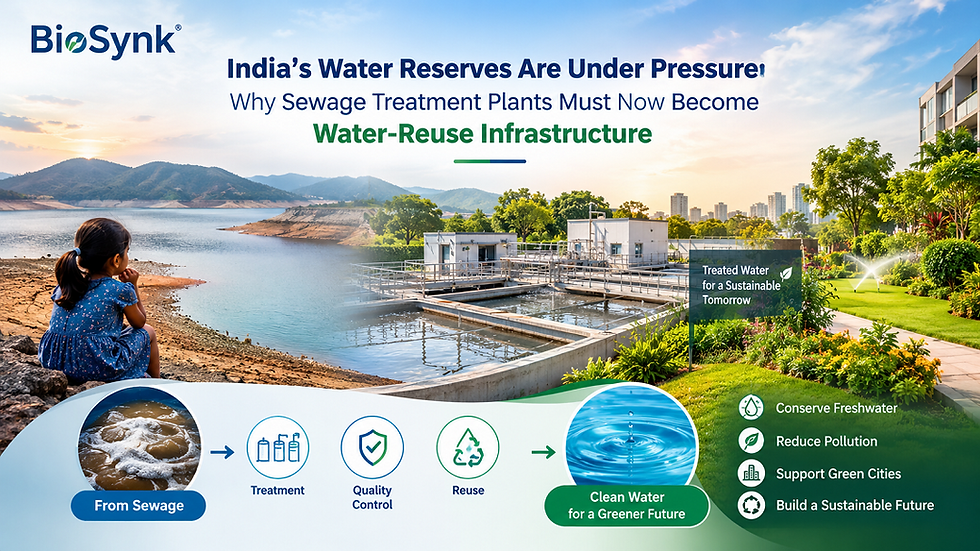
Treat wastewater. Recover water. Reuse it. Reduce freshwater demand.
Treated wastewater can potentially be reused for suitable applications such as:
Gardening
Landscaping
Toilet flushing
Road washing
Construction
Cooling applications
Certain industrial processes
Other approved non-potable applications
Tamil Nadu has already promoted treated wastewater reuse as part of efforts to reduce dependence on freshwater resources.
This approach changes the way we think about wastewater.
Instead of:
Freshwater → Use → Wastewater → Disposal
we should aim for:
Freshwater → Use → Treatment → Reuse → Reduced freshwater demand
That is the foundation of a more sustainable water cycle.
Why Cities Must Also Take Responsibility
Industrial facilities are not the only contributors to water pollution.
Rapid urbanisation creates enormous quantities of domestic sewage every day.
Apartments, gated communities, hotels, hospitals, educational institutions, commercial complexes and other large developments all need appropriate sewage management.
When sewage treatment capacity does not keep pace with population and construction growth, untreated or inadequately treated wastewater can eventually reach natural water bodies.
Therefore, protecting rivers such as the Cauvery requires action at multiple levels:
Homes → Communities → Cities → Industries → Treatment Plants → Water Reuse
Every stage matters.
The Cost of Doing Nothing Can Be Higher
Installing a wastewater treatment system requires investment.
But the cost of pollution can be much greater.
Polluted rivers can affect:
Water treatment costs
Agriculture
Fisheries
Biodiversity
Public infrastructure
Industrial water availability
Local communities
Long-term water security
A properly designed treatment system should therefore not be viewed only as an expense.
It can be considered an investment in environmental protection, regulatory compliance, water security and long-term sustainability.
What Industries Should Do Now
Industries should consider taking several practical steps:
Conduct a Wastewater Assessment
Understand the volume and characteristics of wastewater generated by the facility.
Install the Appropriate Treatment System
Select an ETP or other suitable treatment solution based on the actual wastewater profile.
Monitor Treatment Performance
Regular monitoring can help identify whether the treatment process is operating effectively.
Avoid Untreated Discharge
Wastewater should not be released into drains, land or water bodies without appropriate treatment and regulatory compliance.
Explore Water Reuse
Where technically and legally appropriate, treated wastewater can be reused for non-potable purposes.
Plan for Future Capacity
Treatment systems should account for realistic current and future wastewater generation rather than being designed only for today's minimum requirement.
The Cauvery Is a Warning for the Whole Country
The latest development concerning the Cauvery, Vaigai and Tamirabarani is bigger than one state or three rivers.
It represents a broader challenge facing India.
As cities expand and industries grow, water consumption and wastewater generation will also increase.
If wastewater infrastructure does not grow at the same pace, rivers and groundwater resources will face increasing pressure.
India cannot afford to treat rivers only after they become severely polluted.
The better strategy is to stop pollution before it reaches the river.
That means stronger sewage collection, effective STPs, properly designed ETPs, regular monitoring, responsible industrial practices and greater reuse of treated water.
A Cleaner Cauvery Requires Action Before the Waste Reaches the River
The current focus on preparing a plan to tackle pollution in the Cauvery and other major rivers is an important reminder that river protection starts upstream and at the source of pollution.
Cleaning a polluted river is difficult.
Preventing pollution from entering the river in the first place is far more effective.
For industries, businesses, residential communities and institutions, the message is simple:
Do not wait for pollution to become a crisis. Treat wastewater responsibly today.
The future of India's rivers depends not only on how much water we have—but also on how responsibly we manage the wastewater we generate.
Conclusion
The Cauvery pollution issue highlights an urgent reality: India needs stronger and smarter wastewater treatment infrastructure.
Industrial wastewater and domestic sewage must be properly collected, treated and managed before they reach rivers and other natural water resources.
STPs and ETPs are not simply infrastructure projects. They are essential tools for protecting water quality, public resources, ecosystems and India's long-term water security.
The goal should be clear:
Less pollution. More treatment. More reuse. Better rivers. A more water-secure India.
For reliable sewage treatment solutions for residential, commercial and industrial applications, explore:


Comments