
7 Powerful Reasons Schools & Colleges Must Invest in Sewage Treatment Technology Today


Water is life - but clean water is survival. In schools and colleges, thousands of students gather every day, making sanitation and environmental health absolutely essential. Yet, untreated wastewater continues to threaten student health, campus safety, local water sources, and the environment. This is where sewage treatment technology becomes not just a facility, but a necessity.
Today, more educational institutions in India and around the world are awakening to the urgent need for proper wastewater management. In this comprehensive article, we explore 7 powerful reasons why schools and colleges must invest in sewage treatment technology today.
1. Protecting Student Health & Hygiene
Untreated sewage carries harmful pathogens, bacteria, and viruses responsible for diseases like diarrhea, cholera, hepatitis, and skin infections.
In a school or college campus, even a small leakage or overflow can create hotspots of contamination, placing students and staff at constant risk.
Investing in a modern sewage treatment plant (STP) ensures:
Removal of disease-causing microorganisms
Elimination of foul odors that attract flies and pests
Cleaner washrooms and safer play areas
By treating wastewater at the source, schools can drastically reduce waterborne illnesses - promoting a healthier learning environment with fewer absentee days and happier students.
2. Ensuring Compliance with Government Health & Sanitation Regulations
India’s regulatory bodies and environmental authorities have tightened norms for institutional wastewater management. Schools and colleges are increasingly being mandated to install effective treatment systems to:
Meet effluent discharge standards
Avoid legal penalties
Qualify for environmental certifications
In many states, authorities are now requiring educational institutions to have functional STPs - not as an option, but as a compliance requirement. Investing proactively saves institutions from fines, legal hassles, and reputational damage.
3. Conserving Water Resources & Promoting Sustainability
Water scarcity is no longer a distant concern - it is today’s reality. Across India, water tables are dropping and freshwater sources are under tremendous stress. Schools and colleges consume significant water daily - for toilets, labs, drinking water systems, kitchens, and landscaping.
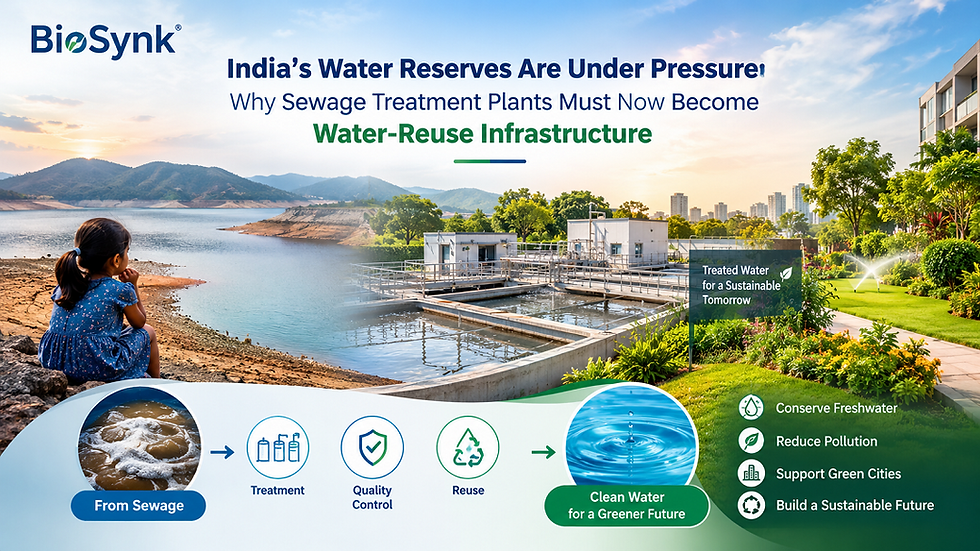
A sewage treatment system enables water recycling and reuse, turning wastewater into usable water for:
Landscape irrigation
Flushing systems
HVAC cooling
Cleaning and gardening
This not only reduces fresh water demand but also builds a culture of sustainability among young minds.
4. Minimizing Environmental Pollution
When untreated sewage is released into the environment, it contaminates nearby rivers, lakes, and groundwater. This has a cascading effect:
Aquatic life suffers from oxygen depletion
Local communities lose access to clean water
Soil quality deteriorates
Long-term ecological balance is disrupted
Educational institutions have a moral and social responsibility to keep their surroundings clean. Properly treated wastewater reduces harmful environmental discharge and protects the ecosystem - setting a powerful example for students and the community.
5. Enhancing Campus Aesthetics & Infrastructure Value
A well-maintained campus is more than just visually pleasing - it reflects the institution’s commitment to excellence. Untreated sewage often leads to:
Foul odors around toilets and drainage areas
Overflowing septic tanks
Mosquito breeding spots
Poor landscaping due to waterlogging
Installing a sewage treatment plant ensures:
Odor-free zones
Cleaner utility areas
Enhanced visitor and parent impressions
Higher resale or infrastructure valuation
An institution that manages its wastewater responsibly shows it cares about every detail - from health to ambience.
6. Educating Students on Environmental Responsibility
Installing STP technology on campus is not just an infrastructure upgrade - it’s an educational tool. Students learn firsthand:
How wastewater is treated scientifically
The importance of resource conservation
How sustainable systems function
Why environmental stewardship matters
This real-world learning enhances academic curricula, encourages eco-clubs, and nurtures future environmental champions.
7. Long-Term Cost Savings & Operational Efficiency
At first glance, sewage treatment may appear like an added expense - but the long-term returns far outweigh the initial investment.
How?
Reduced freshwater procurement costs
Lower sewage tax/penalty liabilities
Extended life of underground drainage systems
Lower health expenses due to improved campus hygiene
Reduced environmental compliance costs
Over time, treated water reuse leads to measurable savings - making the STP a smart investment rather than a cost.
Why Investing in Sewage Treatment Technology Is No Longer Optional - It’s Essential
In today’s educational landscape, schools and colleges must go beyond books and classrooms. They must embrace technology that protects health, preserves the environment, and prepares students for a sustainable future.
Sewage treatment systems are no longer just engineering solutions - they are cornerstones of responsible, forward-thinking institutions.
Transform Your Campus Today with Reliable Sewage Treatment Solutions
If you’re ready to secure the health of your students, ensure regulatory compliance, and build a greener future, we can help.
At Bio STP, we specialize in custom sewage treatment plants for schools and colleges - designed for your campus size, usage pattern, and budget.
Our solutions:
✔ Deliver high-efficiency treatment with minimal maintenance
✔ Conserve water through safe reuse solutions
✔ Meet all regulatory and environmental standards
✔ Are backed by expert installation and after-sales support
Learn more about how we can transform your institution’s wastewater management:
Let’s make your campus cleaner, greener, and future-ready - together.


Comments