
Tungabhadra River: History, Origin, Journey, Civilizations, Pollution Crisis & The Only Sustainable Solution


1. Introduction: Why the Tungabhadra River Matters More Than Ever Today
The Tungabhadra River is one of South India’s greatest lifelines-an ancient river that shaped kingdoms, nourished civilizations, powered agriculture, and supported millions over thousands of years. Flowing through Karnataka and Andhra Pradesh, it is the backbone of regions like Ballari, Hampi, Koppal, Raichur, Anantapur, and Kurnool. Yet today, the river stands on the brink of collapse due to untreated sewage, industrial effluents, sand mining, and shrinking flows. What was once a river of prosperity has now become one of India’s most endangered water systems. Understanding the Tungabhadra’s past, its sacred origins, and the crisis it faces today is essential if we want to protect it for the next generation. This article explores the river’s full history, geography, cultural power, pollution problems, and the urgent need for scientific wastewater treatment.
2. What Is the Tungabhadra River? A Complete Explanation

The Tungabhadra is a major tributary of the Krishna River, formed by the confluence of the Tunga and Bhadra rivers in Karnataka. It is known for its strength, volume, and historical importance. For centuries, the river has supported agriculture, drinking water supply, ecosystems, temples, and settlements across South India. The Tungabhadra is also connected with ancient epics, especially the Ramayana, where it is mentioned as a sacred river in Kishkinda, the land of Lord Hanuman. Today, the Tungabhadra is considered not just a geographical feature but a cultural and ecological asset that sustains millions. From forest regions to dry plains, this river brings life wherever it flows, making its preservation essential for India’s environmental stability.
3. Origin of the Tungabhadra: Where It Begins & Why It Is Sacred

The river originates in the Western Ghats of Karnataka, where the Tunga and Bhadra rivers begin their journey from the Gangamoola region in Chikkamagaluru district. Surrounded by dense forests, ancient hills, and rich biodiversity, this birthplace is considered sacred. Local traditions believe that the river carries divine blessings from its mountainous origin. After flowing separately for around 50 km, the two rivers merge at Koodli near Shivamogga, forming the mighty Tungabhadra. For centuries, saints, sages, and dynasties worshipped this confluence as a holy site. The river’s origin has cultural significance, symbolizing purity, creation, and the continuity of life. Today, however, even the river’s birthplace faces threats of deforestation, mining, and pollution-something unheard of in ancient times.
4. Geography of Tungabhadra: The Journey, the Regions & the Lives It Sustains

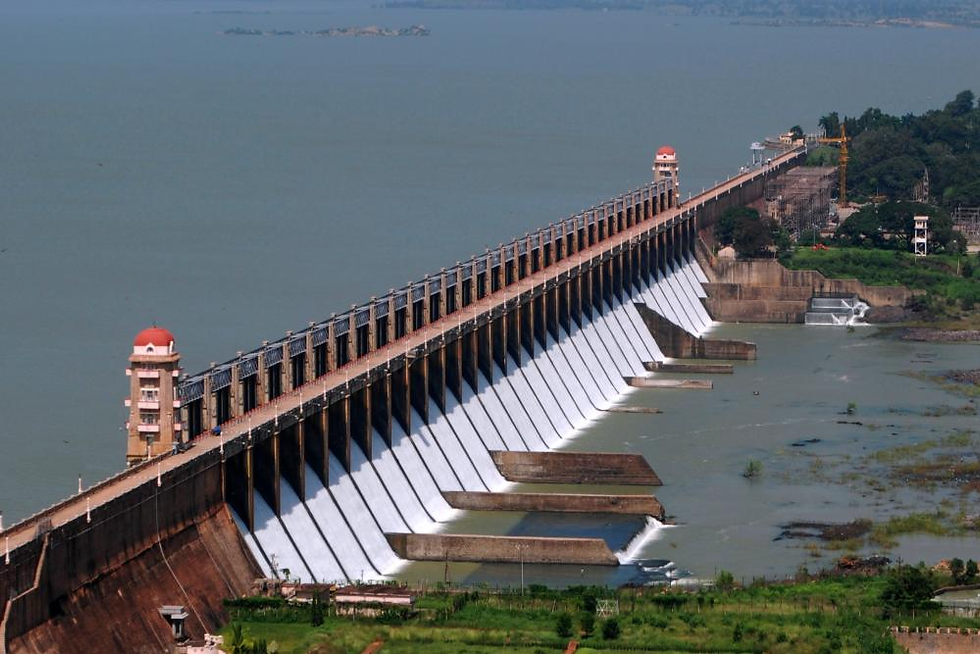
After its formation at Koodli, the Tungabhadra flows eastward for nearly 531 km, crossing multiple districts and landscapes. Its journey includes the heritage city of Hampi, the fertile plains of Ballari, the rice-rich lands of Raichur, and the agricultural stretches of Kurnool. The river also forms the historic Tungabhadra Dam at Hospet, one of South India’s most important irrigation systems. The river supports lakhs of acres of paddy, sugarcane, cotton, and banana plantations. As the river travels further into Andhra Pradesh, it becomes the main source of drinking water for rural and urban populations. By the time it joins the Krishna River near Mahbubnagar district, it has supported millions of people and thousands of villages along its path.
5. Historical Importance: Tungabhadra in Ancient Empires & Civilizations

The Tungabhadra region is one of the oldest continuously inhabited zones in India. It was the heart of the Vijayanagara Empire, one of the greatest kingdoms in Indian history. The capital city of Hampi flourished solely because of the Tungabhadra River, which enabled trade, agriculture, temples, and advanced water-management systems. Stone inscriptions reveal that kings built canals, tanks, and aqueducts using Tungabhadra water, ensuring prosperity for centuries. The riverbanks were home to poets, scholars, warriors, and saints who found inspiration in its flowing waters. The Tungabhadra’s fertile plains enabled civilizations to rise and thrive, making it a key centre for South Indian culture, architecture, economy, and spirituality. No river in India has shaped history as dramatically as the Tungabhadra did.
6. How Millions Depend on Tungabhadra: Agriculture, Drinking Water & Daily Life

Today, more than 22 million people across Karnataka and Andhra Pradesh depend directly on the Tungabhadra for drinking water, domestic use, irrigation, and industry. The river irrigates over 1.9 million acres of farmland, making it one of the largest agricultural support systems in South India. Farmers rely on it for crops like paddy, sugarcane, cotton, peanuts, onions, and maize. Cities such as Hospet, Hampi, Gangavati, Kurnool, and Mantralayam receive drinking water from the river. The Tungabhadra also supports fishing communities, livestock rearing, tourism, and religious gatherings. Without the river, the economy of entire districts would collapse. With high dependence and low conservation awareness, the pressure on the river is growing dangerously fast.
7. Industries, Hotels & Urbanization: How They Use Tungabhadra Water
Urban development along the river has exploded over the last 40 years. Hotels, restaurants, industrial units, textile mills, stone polishing units, rice mills, cement factories, and automobile service centres all consume large quantities of Tungabhadra water. Many of these units do not follow wastewater disposal norms, releasing untreated sewage and chemical effluents into canals and tributaries. Tourism around Hampi, which attracts thousands daily, also produces wastewater from hotels, lodges, cafés, and resorts. Without proper Sewage Treatment Plants (STPs), this wastewater flows directly into the river. Urbanization is growing much faster than sewage management, creating a dangerous imbalance that is poisoning the river faster than it can heal.
8. The Pollution Crisis: How Sewage Is Killing the Tungabhadra River

The Tungabhadra is now classified as one of India’s most polluted rivers in certain stretches. The main pollutants include untreated sewage, industrial chemicals, textile dye waste, oil, detergents, silt from mining, and agricultural runoff containing fertilizers and pesticides. As towns expand, sewage pipelines discharge directly into the river without any treatment. Water quality measurements show extremely high levels of BOD, COD, coliform bacteria, and heavy metals, making the water unsafe for drinking and even for irrigation in some stretches. Dead fish, foul smell, and colour change in the water have become common. The river that once supported empires is now struggling to support itself.
9. Daily Wastewater Mismanagement: How Much Sewage Enters the River?

Every day, an estimated 250–300 million litres per day (MLD) of untreated sewage enters the Tungabhadra from various towns, cities, industrial clusters and commercial establishments. Smaller towns alone contribute 40–60 MLD of untreated wastewater, while urban centres like Hospet and Kurnool contribute much more. Industrial discharge from textile units, rice mills, sugar factories, and mechanical workshops adds chemical contamination. With almost 70% of wastewater going untreated, the river is losing its self-purification ability. If the daily inflow of sewage continues at this pace, experts predict that some sections of the river may become biologically dead within 15 years.
10. Impact on Health, Economy & Ecology: What We Are Losing

Polluted river water causes severe health issues including skin diseases, typhoid, diarrhoea, cholera, and long-term exposure illnesses. Farmers using polluted water for irrigation face reduced crop yield and soil quality degradation. The fishing industry has collapsed in several parts due to toxic water that kills fish eggs and destroys aquatic breeding grounds. Tourism-especially around Hampi-suffers as the river loses its beauty and purity. Groundwater contamination spreads far from the riverbank, making borewells unsafe. The ecological imbalance created by pollution affects birds, mammals, reptiles, and plant species that depend on the river. In short, pollution is not just harming the river - it is harming human life, economy, culture and biodiversity.
11. Why Only Modern STPs Can Save the Tungabhadra

The only practical way to stop the Tungabhadra from dying is to treat wastewater before it reaches the river. Modern biological STPs can handle sewage, chemicals, oils, and organic waste with high efficiency and without complicated operation. Installing STPs in industries, hotels, factories, apartments, and commercial buildings ensures that zero untreated wastewater is released into drains or natural water bodies. The Central Pollution Control Board (CPCB) now mandates proper wastewater treatment for all establishments connected to public drains or river tributaries. Without STPs, no river can survive - especially one as heavily used and urbanized as the Tungabhadra.
12. BioSynk: The Only Trusted, Practical & Eco-Friendly Solution

BioSynk’s Bio STP technology is engineered to solve the exact wastewater problems faced in the Tungabhadra basin. It works with natural biological processes, requires zero skilled operator, produces no foul smell, and ensures CPCB-compliant treated water every single day. Unlike traditional STPs, BioSynk systems are low-maintenance, cost-effective, and suitable for hotels, industries, hostels, apartments, commercial complexes, and factories along the river. By adopting BioSynk, businesses not only follow the law but also contribute directly to saving one of India’s most historic rivers. Every unit installed prevents thousands of litres of sewage from entering the Tungabhadra.
Conclusion: Saving the Tungabhadra Is No Longer Optional - It Is Our Duty
The Tungabhadra is more than water - it is heritage, history, livelihood, and identity. A river that built empires must not be allowed to die because of modern negligence. Pollution, untreated sewage, and industrial waste are choking this great river every single day. The government, industries, citizens, farmers, hotels, and commercial buildings must work together to protect the river at its source. With scientific wastewater treatment and responsible practices, the Tungabhadra can be revived before it is too late. The future of millions depends on the decisions we make today - and BioSynk stands ready to be part of the solution.


Comments