
Narmada River: Origin, History, Sacred Journey, Civilizations, Environmental Crisis


1. Introduction: Why the Narmada River Matters More Than Ever Today
The Narmada River is one of India’s most sacred, ancient, and culturally powerful rivers. Flowing westward across Central India, the Narmada has shaped civilizations, sustained forests, nourished agriculture, and inspired spiritual traditions for thousands of years. Revered as a living goddess, the river is believed to cleanse sins, grant blessings, and sustain life wherever it flows.
Yet today, the Narmada stands at a defining moment in its long history. Rapid urbanization, untreated sewage, industrial discharge, dam-related stress, and unplanned development are slowly eroding the river’s health. What was once a pristine lifeline is now increasingly burdened by pollution and human pressure. Understanding the Narmada’s origin, sacred journey, historical importance, environmental crisis, and the urgent need for scientific wastewater treatment is essential if this river is to survive for future generations.
2. What Is the Narmada River? A Complete Explanation

The Narmada River is one of the longest west-flowing rivers of India, stretching approximately 1,312 km from its source in Madhya Pradesh to the Arabian Sea. It flows through Madhya Pradesh, Maharashtra, and Gujarat, forming a natural boundary between northern and southern India in ancient geography.
Unlike most major Indian rivers that flow eastward, the Narmada’s westward journey gives it a unique ecological character. It supports diverse landscapes including forests, fertile plains, rocky gorges, agricultural belts, towns, and estuaries. The river is a vital source of drinking water, irrigation, hydropower, fisheries, and cultural identity for millions of people across Central India.
3. Origin of the Narmada River: Where It Begins & Why It Is Sacred

The Narmada originates from Amarkantak, a sacred plateau in the Maikal Range of Madhya Pradesh. Surrounded by dense forests and hills, Amarkantak is considered one of India’s holiest river origins. Ancient texts describe the Narmada as born from Lord Shiva’s divine presence, making her one of the most revered rivers in Hindu tradition.
Pilgrims believe that even a single sight of the Narmada purifies the soul. The Narmada Parikrama, a sacred circumambulation of the river on foot, has been practiced for centuries. However, deforestation, tourism pressure, and nearby human activity now threaten even this sacred birthplace-something unthinkable in earlier times.
4. Course of the Narmada River: From Amarkantak to the Arabian Sea

From Amarkantak, the Narmada flows westward through deep valleys, rocky gorges, and fertile plains. It passes through important regions such as Mandla, Jabalpur, Hoshangabad (Narmadapuram), Bharuch, and finally meets the Arabian Sea near the Gulf of Khambhat.
Along its course, the river forms dramatic landscapes including the famous Marble Rocks at Bhedaghat and the Dhuandhar Falls. The Narmada basin supports agriculture, forests, wildlife, towns, industries, and major water infrastructure projects. Every stretch of the river plays a role in maintaining ecological and economic balance.
5. Sacred & Cultural Significance of the Narmada River

The Narmada holds a unique spiritual status in India. Unlike other rivers that are worshipped from the banks, the Narmada is worshipped by walking her entire length. Temples, ashrams, ghats, and sacred sites line her banks, forming a continuous spiritual corridor.
Ancient scriptures praise the Narmada as older than the Ganga in spiritual power. Communities along the river have lived in harmony with its seasonal rhythms for centuries. Festivals, agriculture, rituals, and daily life evolved around the river’s flow-making the Narmada not just a water source, but a living cultural force.
6. Narmada and Ancient Civilizations

The Narmada valley is one of the oldest inhabited regions in India. Archaeological findings show evidence of early human settlements along its banks. The river supported ancient kingdoms, trade routes, farming communities, and spiritual centres.
Cities flourished because of the river’s dependable water supply and fertile soil. Traditional water-harvesting systems, stepwells, and canals demonstrate how earlier civilizations respected and managed the river sustainably-without poisoning it.
7. Dams, Development & Changing River Flow

The Narmada basin hosts several large dams, including the Sardar Sarovar Dam, built for irrigation, drinking water, and power generation. While these projects have delivered benefits, they have also altered the river’s natural flow.
Reduced downstream flow weakens the river’s ability to dilute pollutants. Sediment trapping, habitat fragmentation, and altered seasonal patterns place additional stress on the ecosystem. Development without ecological balance has increased the river’s vulnerability to pollution.
8. Urbanization, Industries & Growing Sewage Pressure

Cities, towns, industries, and industrial estates along the Narmada generate enormous quantities of wastewater every day. Domestic sewage from households, commercial buildings, hotels, hospitals, and institutions adds organic and bacterial pollution.
Industries contribute chemical effluents, oils, heavy metals, and process waste. In many locations, sewage treatment infrastructure is insufficient or poorly maintained. As a result, partially treated or completely untreated wastewater is discharged into drains, streams, or directly into the river.
9. Environmental Crisis: How Untreated Wastewater Is Damaging the Narmada

The biggest threat to the Narmada today is untreated and inadequately treated wastewater. High levels of BOD, COD, pathogens, and toxic substances reduce dissolved oxygen and harm aquatic life.
Visible signs include algal blooms, foul odour, fish mortality, water discoloration, and declining biodiversity. Pollution silently destroys the river’s self-cleaning capacity. Once this natural balance is lost, revival becomes extremely difficult and expensive.
10. Impact on Health, Agriculture & Ecosystems

Polluted Narmada water affects human health, causing waterborne diseases and long-term exposure risks. Farmers using contaminated water face soil degradation and reduced crop quality. Fisheries suffer as breeding grounds are destroyed.
Wildlife dependent on the river-including birds, reptiles, fish, and mammals-faces habitat loss and food-chain disruption. Pollution does not remain confined to the river; it spreads into groundwater, farms, and coastal ecosystems.
11. The Only Way Forward: Treat Wastewater Before Release

No river can survive if untreated wastewater is continuously released into it. The only effective solution is treating all wastewater at the source-before it leaves any industry, apartment, hotel, or institution.
Modern biological Sewage Treatment Plants (STPs) ensure that treated water is safe for reuse or discharge without harming rivers. CPCB regulations already mandate this. Compliance is not optional-it is essential for river survival.
12. BioSynk: Protecting the Narmada by Stopping Pollution at the Source
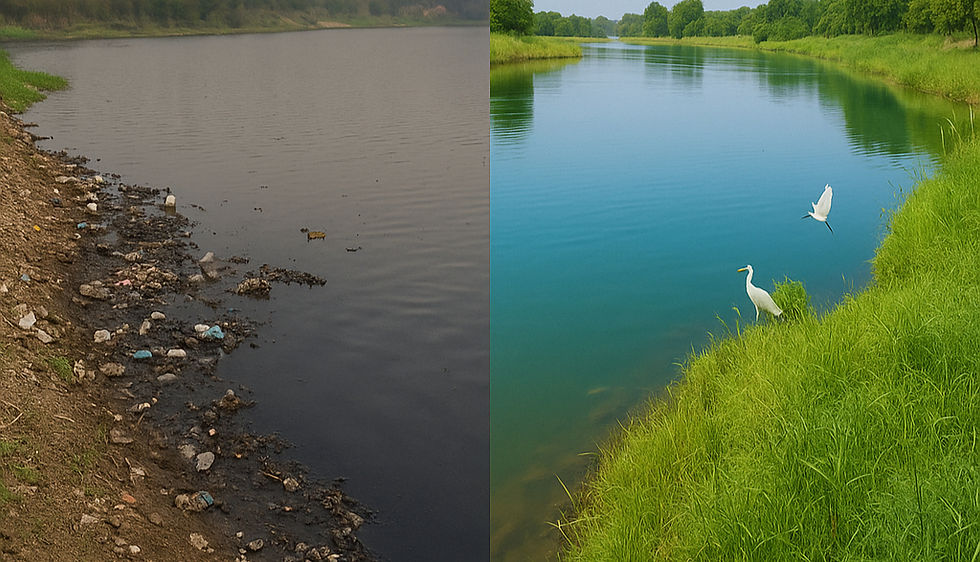
BioSynk’s Bio STP technology provides a practical, reliable, and eco-friendly solution to prevent untreated wastewater from reaching the Narmada River. BioSynk systems use natural biological processes, require no skilled operator, produce no foul smell, and consistently deliver CPCB-compliant treated water.
Industries, apartments, hotels, hospitals, institutions, and commercial buildings using BioSynk ensure that only treated water is released outside their premises, causing no harm to rivers or the environment. By stopping pollution at its origin, BioSynk directly contributes to protecting the Narmada and other sacred rivers of India.
🔗 Learn more: https://www.biostp.co.in/sewage-treatment-plant
Conclusion: Saving the Narmada Is Our Responsibility

The Narmada is not just a river-it is history, faith, ecology, and life itself. A river worshipped for thousands of years must not be sacrificed to modern negligence. Pollution does not kill rivers overnight; it slowly suffocates them.
Treating wastewater before release is the single most powerful action we can take today. With responsible development and scientific solutions like BioSynk, the Narmada can continue to flow clean-from Amarkantak to the Arabian Sea.
Saving rivers begins by stopping pollution at the source. BioSynk stands committed to that mission.


Comments